
What Is a Postmodern Book? Defining the Genre and Its Best Works

The Architecture of Uncertainty
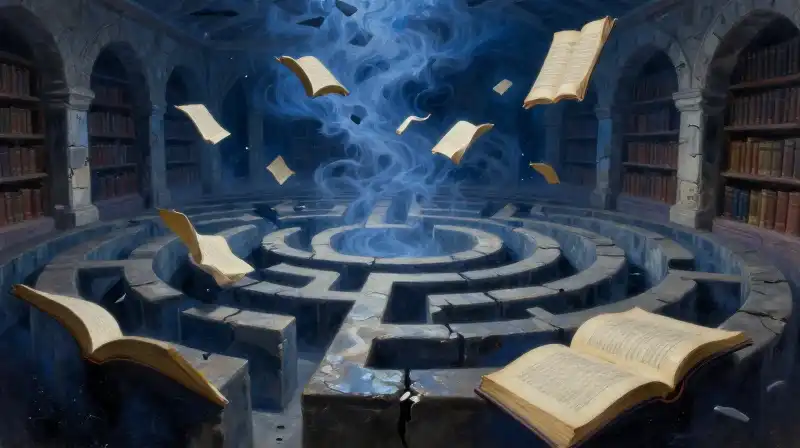
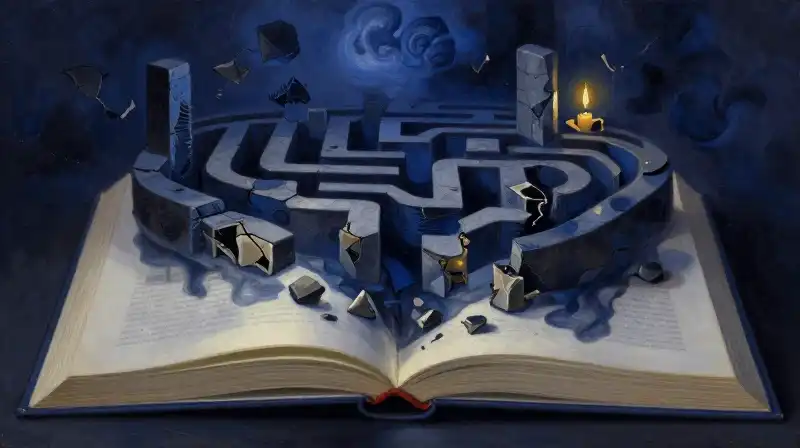
Imagine reading a novel where the narrator stops mid-sentence to argue with you about whether the character they are describing is actually real, or perhaps a novel where the plot itself is a labyrinthine puzzle that refuses to provide a single, coherent truth. This is not a mistake in editing; it is a deliberate engagement with the nature of reality. This is the essence of the postmodern book.
To the uninitiated, postmodern literature can feel like a chaotic assault on the senses—a collection of fragmented stories, unreliable voices, and puzzles that seem designed to frustrate [1]. However, beneath the surface of its experimentalism lies a profound philosophical inquiry. While the modernists of the early 20th century viewed the breakdown of traditional meaning as a tragic loss to be mourned or a puzzle to be solved, postmodernists treat that same fragmentation as an inescapable condition of life [1]. Rather than searching for a single, unifying truth, the postmodern writer often chooses to “play within the chaos,” using irony, playfulness, and self-awareness to navigate a world that no longer offers easy answers.
Defining the Genre: Beyond the Chaos
Postmodernism is difficult to pin down because it functions simultaneously as a historical era, a theoretical framework, and a literary style [1]. To understand a postmodern book, one must distinguish between these three layers:
- Postmodernity: The historical period, generally understood to have begun in the mid-1960s, shaped by the Cold War, the Civil Rights Movement, and the social upheavals of the post-WWII era [1].
- Theoretical Postmodernism: The intellectual movement led by thinkers like Jacques Derrida and Michel Foucault, who questioned the stability of language and the structures of power [1].
- Cultural Postmodernism: The actual aesthetic found in literature, film, and art that utilizes specific techniques to challenge the reader’s perception of reality.
Modernism vs. Postmodernism: A Crucial Distinction
The most common point of confusion for readers is the difference between modernism and postmodernism. While they share a fascination with subjectivity and fragmentation, their attitudes toward that fragmentation are diametrically opposed. This distinction is often framed as a shift from epistemological concerns to ontological ones [1].
| Feature | Modernism | Postmodernism |
|---|---|---|
| Primary Question | ”How can I know the world?” (Epistemology) | “Which world is this, and what is a ‘self’?” (Ontology) |
| View of Chaos | A tragic loss of order; a crisis to be solved through art [1]. | |
| Tone | Earnest, often melancholic or searching. | Ironic, playful, or skeptical. |
| Goal of the Artist | To find meaning within the fragments. | To highlight the impossibility of a single meaning. |
The Postmodern Toolkit: Essential Techniques
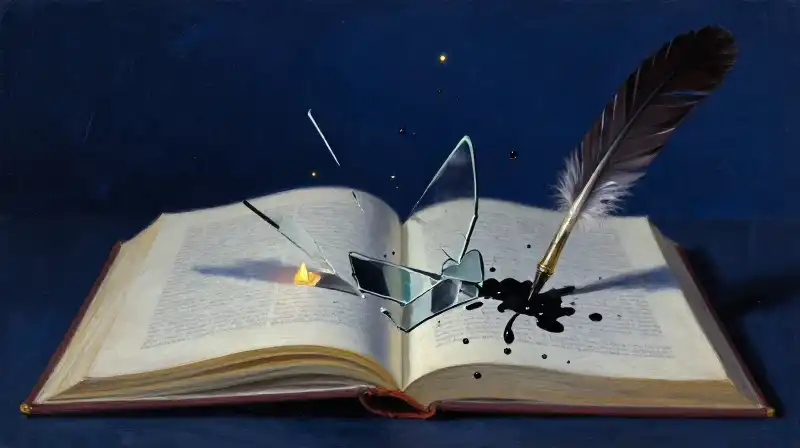
If you are reading a text and wondering, “Is this postmodern?”, look for these specific craft techniques. These are the tools authors use to break the “fourth wall” and remind the reader that they are, in fact, reading a construct.
Metafiction and Self-Reflexivity
Metafiction is “fiction about fiction.” It occurs when a book draws attention to its own status as a manufactured object. An author might step into the narrative to discuss the difficulty of writing a specific chapter, or a character might realize they are trapped in a book. This technique destroys the “suspension of disbelief” to force the reader to think about how stories are constructed.
Unreliable Narration
While many genres use unreliable narrators, postmodernism pushes this to an extreme. The narrator may not just be lying or mistaken; they may be fundamentally incapable of perceiving a coherent reality, or the text may present multiple, contradictory narrators that leave the reader with no “correct” version of events [1].
Intertextuality and Pastiche
Postmodern writers rarely work in a vacuum. They often engage in intertextuality—the practice of referencing, quoting, or building upon other texts—to show that all writing is a conversation with what came before. This often takes the form of pastiche, where the author imitates the style of another genre or author (such as a detective novel or a sci-fi epic) not to mock it, but to recontextualize it within a new, often ironic, framework.
A Guide to Postmodern Literature: Where to Start
Because the genre can be intimidating, the best approach is to move from the relatively accessible toward the deeply experimental. Below is a suggested reading path based on different levels of complexity.
The Entry Points: Accessible Foundations
For those new to the genre, these works provide the postmodern “flavor” without requiring a PhD in philosophy to follow the plot.
- Umberto Eco, The Name of the Rose: A brilliant starting point because it functions as a traditional murder mystery set in a medieval monastery, yet it is deeply layered with semiotics and intertextual play [2].
- Don DeLillo, White Noise: A highly regarded entry point that explores consumerism, media saturation, and the “noise” of modern life through a lens of heightened, often surreal, reality [2].
- Kurt Vonnegut: His works often blend science fiction with a profound, albeit darkly humorous, skepticism of human systems and grand narratives [1].
The Mid-Level: Genre-Mashing and Complexity
Once you are comfortable with the concept of the unreliable narrator and metafiction, these works offer more complex structural challenges.
- David Mitchell, Cloud Atlas: A masterwork of structural experimentation, weaving together six different stories across different eras, mimicking the evolution of literary styles [2].
- Italo Calvino, If on a winter’s night a traveler: A quintessential postmodern novel that is literally about you, the reader, attempting to read a book, only to find the story constantly interrupted [2].
- Philip K. Dick: His work blurs the lines between science fiction and ontological crisis, constantly questioning what is real and what is simulation [1].
The Masterworks: The Deep End
These are the foundational or highly complex texts that define the limits of the genre. They require patience and often multiple readings.
- Thomas Pynchon, The Crying of Lot 49: A dense, paranoid exploration of conspiracy and meaning that exemplifies the postmodern obsession with systems [1, 2].
- Mark Danielewski, House of Leaves: An ergodic text where the physical layout of the words on the page mirrors the psychological disorientation of the characters [2].
- Jorge Luis Borges: Often cited as the bridge between modernism and postmodernism, his short stories function as philosophical labyrinths [1].
The Postmodern Legacy: From Pynchon to the 21st Century
Postmodernism did not simply vanish with the turn of the millennium; it evolved. While the high-irony, maximalist style of the 1960s and 70s (seen in the works of William Gaddis or John Barth) might feel distinct from contemporary fiction, the movement’s DNA is everywhere.
Modern writers are often described as “post-ironic,” taking the fragmented techniques of their predecessors and applying them to more sincere, emotional narratives [1]. Authors like Dave Eggers, with A Heartbreaking Work of Staggering Genius, and Jennifer Egan, with A Visit from the Goon Squad, use postmodern structures—such as unconventional formatting or self-conscious narration—not just to play with form, but to explore deep, human truths in a fractured age [1].
Why Postmodernism Matters
To read a postmodern book is to accept a challenge. It asks the reader to abandon the desire for a tidy ending or a single, authoritative voice. While this can be frustrating, it is also liberating. By deconstructing the “rules” of storytelling, postmodernism mirrors the complexity of our own lives in an era of information overload and shifting truths. It teaches us that while we may never find a single, objective meaning to the world, we can still find profound, if fragmented, beauty in the act of searching.
Sources
- Postmodern literature — en.wikipedia.org
- Best Postmodern Literature? : r/books — reddit.com
Frequently Asked Questions
What is a postmodern book?
A postmodern book is a work that deliberately engages with the nature of reality through fragmentation, unreliable voices, and puzzles. It often utilizes techniques like metafiction and irony to challenge the reader's perception of truth and the construction of stories.
Who is the most famous postmodern author?
The provided article does not identify a single most famous postmodern author, though it lists several significant figures such as Thomas Pynchon, Kurt Vonnegut, and Italo Calvino.
What are some examples of postmodern books?
Examples mentioned include Umberto Eco's "The Name of the Rose," Don DeLillo's "White Noise," David Mitchell's "Cloud Atlas," and Mark Danielewski's "House of Leaves."
Related Articles