
What are the postmodern elements in Kurt Vonnegut's Slaughterhouse-Five

Kurt Vonnegut’s Slaughterhouse-Five, or The Children’s Crusade: A Duty-Dance with Death is often cited as a cornerstone of postmodern literature. Published in 1969, the novel’s fragmented narrative, unreliable narration, and deliberate dismantling of traditional storytelling conventions immediately signaled a departure from modernist sensibilities. It’s a work deeply influenced by, and arguably foundational to, the postmodern movement’s rejection of grand narratives and embrace of subjectivity. Vonnegut crafted a narrative that confronts the absurdity of war and human existence with a darkly humorous and profoundly unsettling perspective.
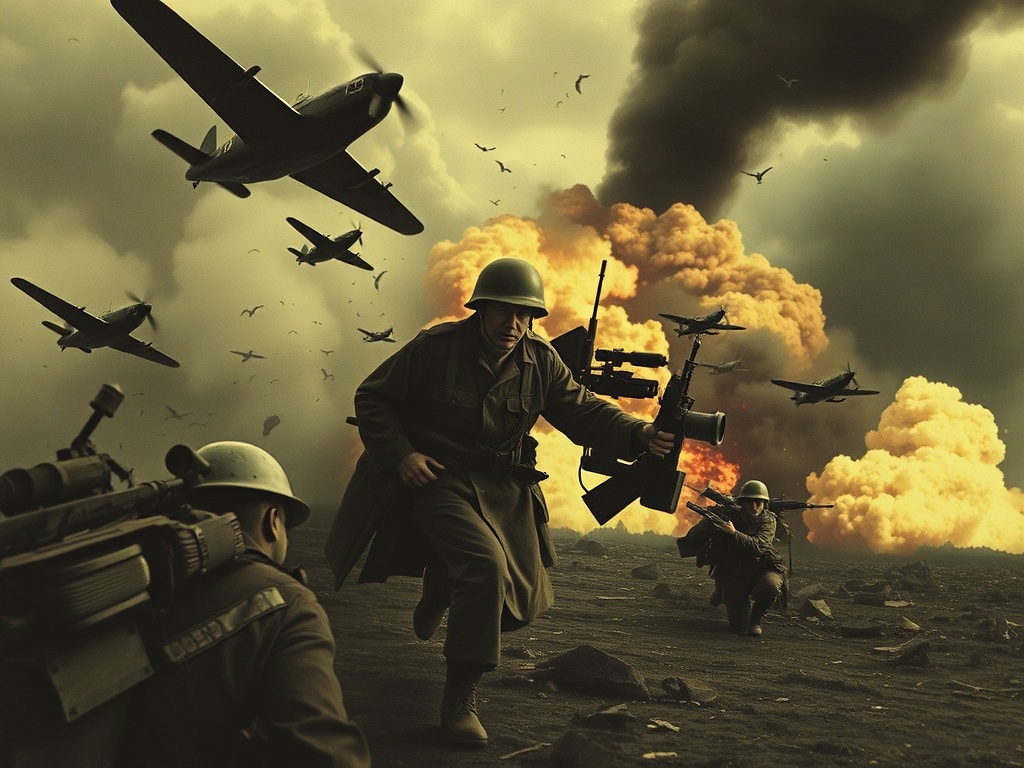
The novel’s central character, Billy Pilgrim, becomes “unstuck in time,” experiencing events from his life out of chronological order. This seemingly bizarre concept isn’t simply a plot device, but a reflection of postmodern anxieties about the nature of time, history, and truth. Instead of offering a linear, coherent account of Billy’s experiences during World War II, particularly the firebombing of Dresden, Vonnegut presents a chaotic jumble of memories, alien encounters, and philosophical musings. This intentional disruption challenges the reader’s expectations of narrative linearity and invites them to grapple with the fragmented nature of memory and experience itself.
## Fragmentation and Discontinuity
A key feature of Slaughterhouse-Five is its deliberate fragmentation. The narrative doesn’t progress in a predictable sequence; instead, Billy jumps between different points in his life – childhood, war, captivity, life as an optometrist, and his time with the Tralfamadorians. This structure mirrors the psychological trauma of war, which disrupts a person’s sense of self and shatters any linear understanding of their life story. Vonnegut eschews a traditional, tightly plotted narrative arc, embracing a more associative and episodic style.
This fragmentation is further emphasized by the novel’s short, often disconnected chapters. Each chapter can feel like a vignette, a fleeting glimpse into a different facet of Billy’s life. This technique rejects the idea of a unified, coherent narrative voice and suggests that reality itself is broken and discontinuous. The reader is forced to actively piece together the narrative, creating their own understanding of Billy’s journey and the events that have shaped him.
The use of intertextuality – the referencing of other texts and media – also contributes to the fragmentation. Vonnegut sprinkles in quotes from various sources, often abruptly interrupting the flow of the narrative. These interruptions highlight the novel’s self-awareness and disrupt any illusion of a seamless, authoritative storytelling. It’s a deliberate artistic choice to demonstrate that meaning isn’t inherent but is constructed and constantly shifting, a core tenet of postmodernism.
## Metafiction and Self-Awareness
Slaughterhouse-Five is replete with elements of metafiction, where the narrative self-consciously draws attention to its own construction as a work of fiction. Vonnegut regularly addresses the reader directly, acknowledging that he is telling a story and commenting on the process of storytelling itself. This breaks the traditional fourth wall, creating a sense of intimacy and blurring the lines between reality and fiction.
The author inserts himself into the narrative as a character, reflecting on his own experiences researching and writing the book. This self-referential technique serves to deconstruct the notion of the author as an omniscient narrator, demonstrating that all narratives are subjective and shaped by the perspectives of the storyteller. This questioning of authorial authority is a defining characteristic of postmodern literature.
Furthermore, the novel playfully questions the very concept of historical truth. Vonnegut acknowledges the limitations of his own memory and perspective, and presents the events of Dresden through a lens of fragmented recollections and fantastical imaginings. He admits that telling the truth about war is impossible, highlighting the inherent subjectivity of historical representation.
## Rejection of Grand Narratives and Universal Truths
Postmodernism fundamentally challenges the idea of “grand narratives” – overarching explanations of history and the human condition, such as Marxism or Christianity. Slaughterhouse-Five actively rejects these narratives, refusing to offer a singular, definitive interpretation of war or human suffering. Instead, it embraces relativism, suggesting that truth is subjective and dependent on individual perspective.
The Tralfamadorians, with their view of time as a simultaneous continuum, embody this rejection of linear historical progression. They see all moments as existing at once, rendering concepts like cause and effect, progress, and meaning meaningless. This perspective undermines the notion of a purposeful, teleological view of history, further dismantling the potential for any grand, overarching narrative. Vonnegut’s universe isn’t governed by morality or reason, but by chance and randomness.
The novel’s pervasive sense of absurdity and dark humor also contributes to this rejection of universal truths. Vonnegut uses satire to expose the hypocrisy and irrationality of war and human behavior. He doesn’t offer solutions or easy answers; instead, he presents a world characterized by chaos, suffering, and ultimately, the impossibility of achieving a clear understanding of existence.
## Subjectivity and Unreliable Narration
Billy Pilgrim’s experiences, as presented in Slaughterhouse-Five, are profoundly subjective. His time-traveling and encounters with the Tralfamadorians raise questions about the reliability of his narration. Is he truly unstuck in time, or is he constructing these narratives as a coping mechanism to deal with the trauma of Dresden? The novel deliberately avoids providing a definitive answer.
Vonnegut’s narrative style deliberately blurs the line between reality and fantasy. The Tralfamadorians, with their strange customs and alien worldview, could be interpreted as hallucinations or projections of Billy’s subconscious. This ambiguity challenges the reader to question the nature of perception and the possibility of attaining objective truth. It underscores that everyone’s understanding of reality is filtered through their individual experiences and biases.
The fragmented narrative further contributes to the sense of unreliability. By presenting events out of chronological order, Vonnegut undermines any sense of linear cause and effect, suggesting that Billy’s understanding of his own life is incomplete and potentially distorted. The novel foregrounds the constructed nature of reality and the limitations of human understanding.
## Conclusion
Slaughterhouse-Five powerfully exemplifies the key tenets of postmodern literature, challenging traditional notions of narrative, truth, and the human condition. By embracing fragmentation, metafiction, and a rejection of grand narratives, Vonnegut creates a work that is both deeply unsettling and profoundly moving. His innovative use of unreliable narration forces readers to actively engage with the text and question their own assumptions about reality.
Ultimately, the novel’s enduring significance lies in its ability to capture the anxieties and uncertainties of the postmodern era. It is a testament to the power of literature to confront difficult truths and challenge the reader to grapple with the complexities of existence, ultimately embracing the ambiguity and absurdity of life in a world devoid of easy answers.
Related Articles