
Kindred Graphic Novel: Analyzing Octavia Butler’s Visual Legacy

Introduction
In 1976 Los Angeles, Dana is a young African-American woman living a modern life, but her reality is periodically fractured by an inexplicable force. Without warning, she is pulled through time, landing on a Maryland plantation in the antebellum South [2]. This is the central engine of Octavia E. Butler’s Kindred, a work that has long defied simple categorization, straddling the lines between science fiction, speculative fiction, and historical drama [2]. While the original novel remains a towering achievement of 20th-century literature, the Kindred graphic novel adaptation—penned by Damian Duffy and illustrated by John Jennings—offers a visceral, visual reconfiguration of Butler’s themes that demands its own critical attention.
The adaptation, which won the 2018 Eisner Award for Best Adaptation from Another Medium, does not merely replicate the prose of the original; it distills it [1]. Through the collaborative synergy of Duffy’s script and Jennings’ striking visual language, the graphic novel transforms the internal psychological struggle of the protagonist into a harrowing, externalized experience of history and memory [1, 2].
The Mechanics of Displacement: Time and Trauma
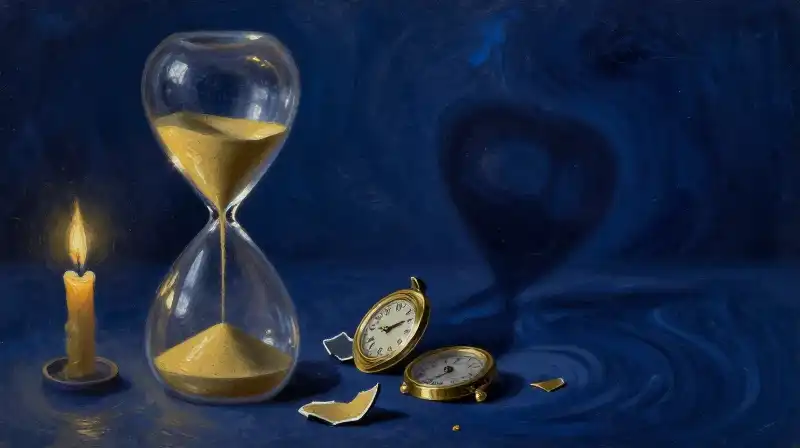
A key element of the narrative is the “time-dilation effect,” a temporal mechanism that prevents Dana from treating her journeys as mere historical excursions [2]. The physics of the displacement are uneven: a few minutes spent in the safety of 1976 can correspond to much longer, more grueling periods of time spent surviving the plantation [2]. This creates a sense of profound disorientation, mirroring the psychological fracturing that occurs when one is forced to navigate two incompatible worlds.
The tension of the story is driven by a biological and historical compulsion: Dana must repeatedly intervene to save the life of Rufus, the son of a plantation owner [2]. Rufus is not a one-dimensional villain, but a complex, deeply flawed figure whose survival is inextricably linked to Dana’s own existence. This dynamic forces the narrative to explore the terrifying nuances of power, complicity, and the ways in which survival often requires compromise with the very systems of oppression one seeks to resist.
Crafting the Visual Legacy: Jennings and Duffy
Translating a novel as linguistically dense and psychologically intimate as Kindred into a visual medium is a monumental task. The adaptation succeeds by leaning into the strengths of the graphic novel format, using art to communicate what prose can only describe. The work is characterized by several specific craft choices:
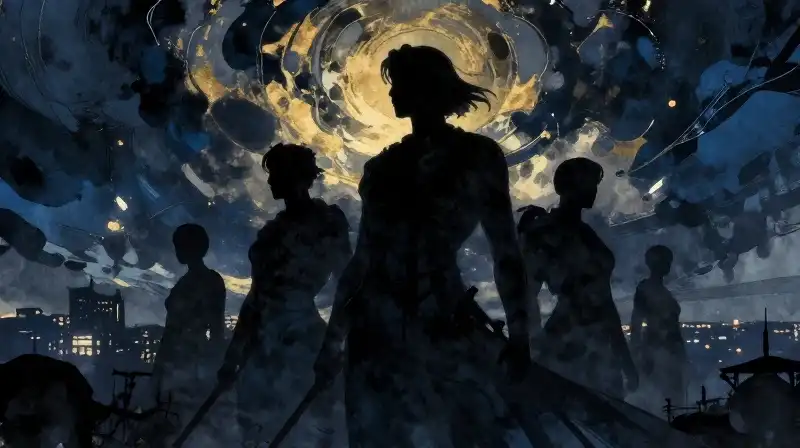
- Gothic and Jagged Aesthetics: John Jennings utilizes a “brutally jagged, disorienting, gothic, and impactful” art style [2]. This visual turbulence prevents the reader from ever feeling settled, echoing Dana’s own lack of agency and stability.
- The Convergence of Genres: The art serves to merge “the monstrous, the magical, and the ancestral” [1]. By visually blending these elements, the adaptation helps transform the reader’s understanding of how history is not just a record of facts, but a living, sometimes spectral, presence.
- Narrative Distillation: Damian Duffy’s script functions as a distillation of Butler’s complex themes [2]. Rather than attempting a page-for-page recreation, the adaptation focuses on the emotional and thematic core, allowing the imagery to carry the weight of the historical critique.
Decoding the Genre: Science Fiction or Horror?
Because Kindred uses a non-linear, speculative mechanism to explore historical reality, critics have long debated its proper classification. This debate is central to understanding how we approach the work.
| Genre Label | Focus within the Work |
|---|---|
| Science Fiction | The use of time travel and the speculative mechanics of temporal displacement. |
| Speculative Fiction | The “what if” scenario of a modern woman interacting directly with the machinery of slavery. |
| Horror | The visceral terror of the plantation, the loss of bodily autonomy, and the predatory nature of the power structures [2]. |
Common Questions Regarding Kindred
Is Kindred a graphic novel?
While Kindred originated as a landmark science-fiction novel by Octavia E. Butler, there is a highly acclaimed graphic novel adaptation created by Damian Duffy and John Jennings [1]. This version is a distinct medium that uses visual storytelling to interpret Butler’s themes.
What is the Netflix show about Octavia Butler?
While there has been significant interest in adapting Butler’s works for the screen—given the massive cultural impact of Kindred—readers looking for a direct adaptation should note that the graphic novel remains one of the most prominent recent reinterpretations of her work. (Note: Readers should distinguish between specific adaptations and the broader movement of bringing Butler’s work to visual media [1]).
Why It Matters: The Persistence of Memory
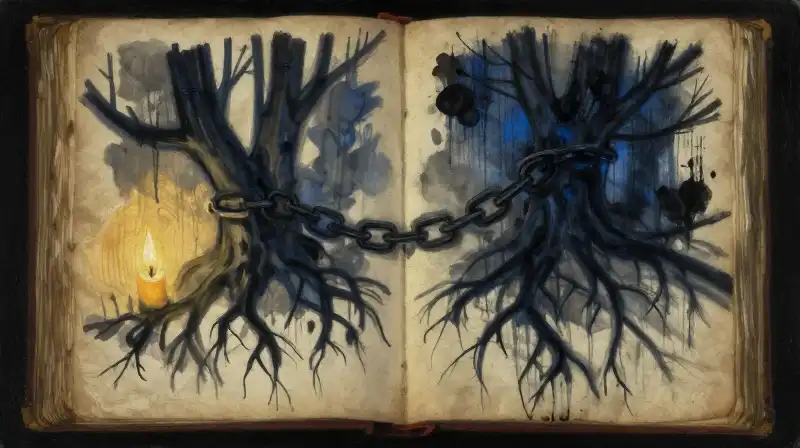
The Kindred graphic novel is more than a successful translation of prose to panel; it is a vital piece of contemporary literary craft. By utilizing the graphic medium to explore race, gender, power, and family, the adaptation provides a critique of American history that remains deeply relevant to modern political realities [1, 2]. It forces the reader to confront the fact that history is not a distant, closed book, but a force that continues to shape identity and social structures. Through Jennings’ disorienting art and Duffy’s focused adaptation, the work ensures that the trauma and the resilience of those who lived through the era of slavery are seen with unflinching clarity.
Sources
- GRAPHIC NOVEL REVIEW: Octavia E. Butler’s Kindred, an adaptation of an iconic work — Comics Bookcase — comicsbookcase.com
- Kindred The Graphic Novel: A Review — thenerdsofcolor.org
Frequently Asked Questions
Is Kindred a graphic novel?
While originally a science-fiction novel by Octavia E. Butler, there is a highly acclaimed graphic novel adaptation by Damian Duffy and John Jennings. This adaptation is a distinct medium that uses visual storytelling to interpret the original themes.
What is the Netflix show about Octavia Butler?
The provided article does not contain information regarding a specific Netflix show about Octavia Butler. It only notes that there has been significant interest in adapting her works for the screen.
Related Articles