
Sci-Fi Short Stories: Essential Authors and Iconic Themes

Introduction
The short story is the laboratory of science fiction. While the sprawling space opera of a novel demands the construction of entire galaxies, political systems, and linguistic histories, the short story allows an author to isolate a single, piercing variable. It is a medium designed for the “high-concept” idea—a way to test a single philosophical or scientific “what if” without the narrative weight of a thousand pages [1]. In the hands of a master, a ten-page story can achieve a level of conceptual density that a novel might dilute, presenting a concentrated dose of wonder, dread, or social critique.
From the cosmic entropy of Isaac Asimov to the neon-drenched cybernetics of William Gibson, science fiction short stories function as both dreams and warnings [1]. They allow us to glimpse the logical conclusion of our current trajectories, whether those trajectories lead toward technological transcendence or a quiet, automated apocalypse. To read the genre through its short fiction is to engage with the most agile version of speculative thought.
The Architecture of the Idea: Why the Short Form Works
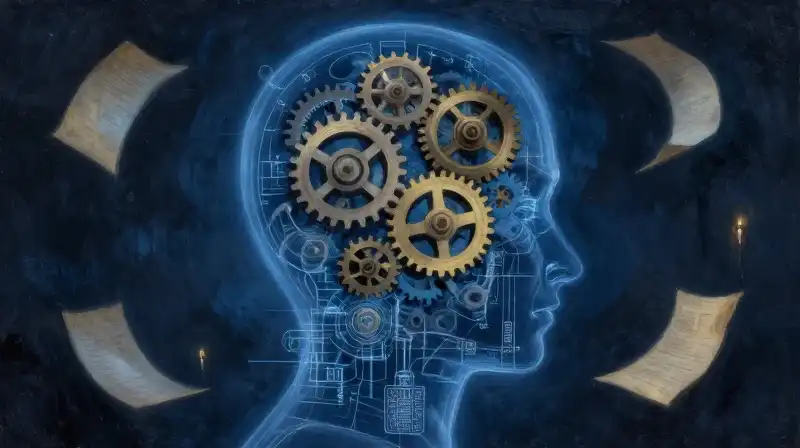
The effectiveness of science fiction in short form lies in its economy. When an author is not burdened by the need to flesh out every logistical detail of a starship’s engine, they can focus on the psychological or sociological impact of that engine’s existence. This leads to several distinct literary modes:
- Conceptual Extremism: Authors like Ted Chiang excel at taking “super-bonkers” or highly abstract concepts—such as a society of robots that process thought through pneumatic tubes in “Understand”—and executing them with disciplined, imaginative prose [1].
- Genre Blurring: The short form frequently allows science fiction to bleed into other territories. One can find the “monster horror” elements of Alien distilled into the claustrophobic terror of Stephen King’s “The Jaunt” [1].
- The Structural Hybrid: The “locked-room mystery” can be recontextualized through a speculative lens, as seen in Arkady Martine’s “Rose/House,” which uses the tension of a mystery to explore the complex relationship between humanity and sentient machine intelligence [2].
Foundational Voices and Iconic Themes
To understand the evolution of the genre, one must look at the authors who used the short story to define its boundaries. These writers did not just tell stories; they provided the vocabulary for how we discuss the future.
The Philosophers of Scale
Isaac Asimov remains a pillar of the genre, particularly for his ability to tackle the macro-scale of the universe. His seminal story, “The Last Question,” explores the terrifying and sublime possibility of reversing entropy, a concept so resonant that it has become a digital Easter egg for modern voice assistants [1]. Similarly, Ray Bradbury utilized the medium to evoke profound emotional responses to technology. His “There Will Come Soft Rains” offers a haunting, post-apocalyptic portrait of a neighborhood that continues to function long after its human inhabitants have vanished, proving that science fiction can be as much about elegiac beauty as it is about technological dread [3].
Dystopia and Social Critique
Science fiction often serves as a mirror to contemporary anxieties, using speculative settings to critique real-world power structures. This is evident in several key works:
- Forced Equality: Kurt Vonnegut’s “Harrison Bergeron” examines the high cost of a society that mandates equality through the literal handicapping of excellence [3].
- Militarism and Dehumanization: Jūza Unno’s 1937 story “Eighteen O’Clock Music Bath” acted as a chilling precognition of Japanese militarism, depicting a world where dehumanizing “music baths” served the state [2].
- Corporate Monopolies: Modern writers like Ai Jiang continue this tradition; in “I Am AI,” the narrative uses a character pretending to be a chatbot to explore a future dystopia governed by corporate interests [2].
Identity and the Alien Within
A recurring tension in the genre is the subversion of the “self.” Philip K. Dick frequently utilized the short story to explore the erosion of identity, often placing the “alien” within the most domestic of settings. In “Human Is,” for example, the horror is not found in a distant galaxy, but in the realization that a husband has been replaced by an alien lifeform [3]. This theme of ownership and cultural respect is also central to the works of Carolyn Ives Gilman, whose “Exile’s End” examines the ethics of how we possess and interact with the “other” [2].
Comparing Speculative Styles
While all these works fall under the broad umbrella of science fiction, their approaches to “the future” vary significantly in tone and intent.
| Style / Mode | Primary Focus | Representative Authors |
|---|---|---|
| Hard Science Fiction | Technical accuracy and logical extensions of scientific laws. | Isaac Asimov, Ted Chiang |
| Cyberpunk | High tech, low life; the intersection of digital consciousness and urban decay. | William Gibson |
| Speculative Dystopia | Social engineering, political control, and the loss of agency. | Kurt Vonnegut, Ai Jiang |
| Literary/Soft Sci-Fi | Emotional resonance, poetic prose, and sociological nuance. | Ray Bradbury |
What are some sci-fi stories?
For those looking to begin their journey into the genre, the “best” stories are often those that offer a complete, self-contained experience. If you are looking for specific entry points, consider the following:
- For the Wonder-Seeker: “The Nine Billion Names of God” by Arthur C. Clarke provides a brilliant, brief look at the intersection of mysticism and mathematics.
- For the Noir Enthusiast: William Gibson’s Burning Chrome collection, particularly “Johnny Mnemonic,” provides the foundational grit of the cyberpunk aesthetic [1].
- For the Existentialist: “Redo” by Brigitte Winter explores the terrifying psychological lengths of obsession within a speculative framework [2].
Synthesis: Why the Short Story Matters
Science fiction short stories are more than just “smaller” versions of novels. They are essential intellectual exercises. By stripping away the necessity for expansive world-building, these stories force the reader to confront the core of a concept: What happens to a soul in a world of perfect machines? What happens to a society that trades freedom for stability? By focusing on the singular “what if,” the short story provides a concentrated space for us to contemplate the infinite possibilities of our own future.
Sources
- What are the best scifi short stories? : r/scifi — reddit.com
- The Best Science Fiction Short Stories I Read in 2024 … and where you can read them. — Science Fiction Short Story Reviews — shortsf.com
- Teaching Science Fiction — creativeenglishteacher.com
Frequently Asked Questions
What are some sci-fi stories?
The article mentions several stories, including Isaac Asimov's "The Last Question," Ray Bradbury's "There Will Come Soft Rains," and Arthur C. Clarke's "The Nine Billion Names of God." Other examples include Ted Chiang's "Understand," Kurt Vonnegut's "Harrison Bergeron," and William Gibson's "Johnny Mnemonic."
Related Articles