Fables vs Fairy Tales: Understanding the Key Differences

The Moral and the Magical: Distinguishing Fable from Fairy Tale
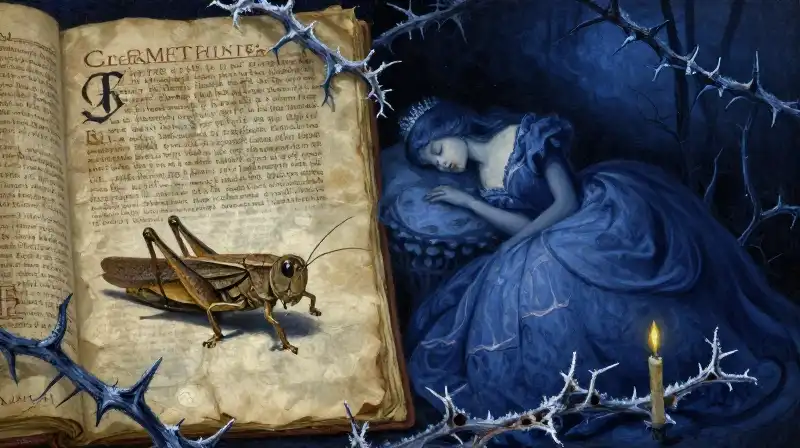
A grasshopper sings through a summer of plenty, only to find himself starving when the frost arrives; a princess sleeps for a century behind a wall of thorns, waiting for a kiss to break a curse. At first glance, these stories occupy the same shelf in a child’s library, unified by their departure from the mundane laws of physics and their reliance on archetypal characters. However, to the literary eye, they are performing entirely different tasks. While they share the DNA of folklore, the fable and the fairy tale operate with different engines: one is a tool for instruction, the other a vessel for wonder and social reflection.
Understanding the distinction between fables and fairy tales is more than a taxonomic exercise; it is an exploration of how humans use narrative to navigate the world. One seeks to sharpen our moral compass, while the other seeks to expand our imaginative horizon. By looking closely at their structures, their purposes, and their metaphors, we can see how these two genres serve distinct needs in the human experience.
The Fable: An Expanded Proverb
The fable is a precision instrument. It is characterized by its economy of scale, focusing on a concise structure that prioritizes a single action and its immediate consequence [1]. Unlike the sprawling epic or the winding fairy tale, the fable does not wander; it moves directly toward a point. It is often described as an “expanded proverb,” a narrative shell built around a core truth [1].
The hallmarks of the fable include:
- Moral Metaphor: The primary function of a fable is to act as a moral metaphor, designed to teach a clear lesson about right and wrong [1].
- Anthropomorphism: Fables frequently utilize animal protagonists—creatures that act as stand-ins for specific human traits, such as the cunning of a fox or the industriousness of an ant [1, 3].
- Concision: The plot is stripped of subplots and unnecessary world-building to ensure the “lesson” remains the undisputed center of the work [1].
Consider the classic Aesopic tradition. In The Ant and the Grasshopper, the narrative isn’t interested in the grasshopper’s backstory or the intricate ecology of the meadow; it is interested in the tension between industry and sloth [1, 3]. The story functions as a closed loop of cause and effect: prepare, or suffer the consequence. This same structural logic can be found in modern media, where films like Toy Story or Wall-E adopt the fable’s framework to deliver specific, digestible moral truths [3].
The Fairy Tale: Social and Wonder Metaphors
If the fable is a scalpel, the fairy tale is a kaleidoscope. Rooted in the tradition of the German märchen (wonder tale), fairy tales are a subcategory of folk tales that embrace the fantastical not just as a backdrop, but as the very fabric of their reality [1]. They do not aim for the instructional brevity of the fable; instead, they lean into the complexity of magic, enchantment, and the supernatural.
Fairy tales operate through different mechanisms:
- Social Metaphor: While fables teach morality, fairy tales often serve as “social metaphors,” illustrating how societies function, how power is contested, and how individuals navigate social hierarchies [1].
- Archetypal Characters: Rather than using animals to represent single traits, fairy tales utilize recognizable human archetypes—the princess, the trickster, the youngest son, or the wicked stepmother—to explore human dynamics [1].
- The Realm of Wonder: The presence of magic is essential. Whether it is a spinning wheel that induces sleep or a pumpkin that becomes a carriage, the magical element is a driver of the plot rather than a mere ornament [3].
Representative works like Cinderella, Snow White, or Thumbelina demonstrate this depth. These stories are less about a single “rule” of behavior and more about the journey of a character through a world of shifting fortunes, magical interventions, and social transformations [3].
Key Distinctions at a Glance
The boundary between these genres can occasionally blur—particularly in “animal tales” that carry a heavy moral weight—but the following table outlines the fundamental differences in their literary intent and execution.
| Feature | Fable | Fairy Tale |
|---|---|---|
| Primary Goal | Instructional: To teach a moral lesson [1]. | Exploratory/Entertaining: To reflect social truths or provide wonder [1, 2]. |
| Protagonists | Often anthropomorphic animals representing human traits [1]. | Human archetypes (royalty, peasants, magical beings) [1]. |
| Structure | Concise, single-action, focused on consequence [1]. | Expansive, episodic, and driven by magical encounters [1]. |
| Metaphor Type | Moral metaphor [1]. | Social metaphor [1]. |
| Examples | The Ant and the Grasshopper [3]. | Sleeping Beauty, Pinocchio [3]. |
Navigating the Grey Areas
Because both genres fall under the broader umbrella of folklore, readers often encounter confusion when a story seems to inhabit both spaces. This is most common when a story uses animals (a fable trait) to tell a sweeping, magical narrative (a fairy tale trait).
Is Goldilocks a fairy tale or fable?
Goldilocks and the Three Bears sits on the fence. It features animal protagonists (suggesting a fable), but it lacks the explicit, didactic moral instruction found in Aesop [1]. It functions more as a cautionary folk tale or a “wonder tale” about boundaries and intrusion, placing it closer to the spirit of a fairy tale or a general folktale than a strict moralizing fable.
Is Cinderella a fable or folktale?
Cinderella is a classic fairy tale, which is itself a specific type of folktale [3]. While it deals with themes of virtue being rewarded, its primary engine is the magical intervention and the transformation of social status, making it a “social metaphor” rather than a brief “moral metaphor” [1].
The Wider Spectrum: Myth vs. Fable vs. Fairy Tale
To truly understand these genres, one must place them within the larger ecosystem of folklore. It is a common mistake to group myths, fables, and fairy tales into a single category of “old stories,” but they serve different psychological and cultural functions [1].
Where the fable addresses morality and the fairy tale addresses society and wonder, the myth addresses the human psyche. Myths serve as “psychological metaphors,” exploring the fundamental workings of the human mind, the origins of the universe, and the relationship between the divine and the mortal [1]. While a fable tells you how to behave and a fairy tale tells you how the world works, a myth attempts to explain why we exist at all.
The Enduring Power of the Short Form
The distinction between fables and fairy tales is not merely a matter of academic pedantry; it is a distinction of intent. We turn to the fable when we seek clarity, looking for a distilled truth that can be applied to our conduct. We turn to the fairy tale when we seek expansion, looking to see our own social struggles and hopes reflected in a world where the impossible is possible.
Both genres endure because they respect the economy of human attention. Whether through the sharp, stinging lesson of a talking tortoise or the sweeping, magical ascent of a persecuted heroine, these stories provide a framework for understanding our place in the world—one by teaching us how to live, and the other by teaching us how to dream.
Sources
- Fables, Myths, and Fairy Tales - Classical ConversationsClassical Conversations — classicalconversations.com
- What are some key differences and similarities between fairy tales and fables? : r/answers — reddit.com
- Fairy Tales vs. Fables — authorrachelcooper.com
Frequently Asked Questions
Is Goldilocks a fairy tale or fable?
Goldilocks sits on the fence because it features animal protagonists, which is a fable trait. However, it lacks explicit moral instruction and functions more as a "wonder tale" or cautionary folktale, placing it closer to the spirit of a fairy tale.
Is Cinderella a fable or folktale?
Cinderella is a classic fairy tale, which is a specific subcategory of folktale. It is characterized as a "social metaphor" driven by magical intervention and social transformation rather than a brief moral metaphor.
Related Articles