Aesop’s Fables and the Bible: Parables, Morals, and Meaning


Introduction
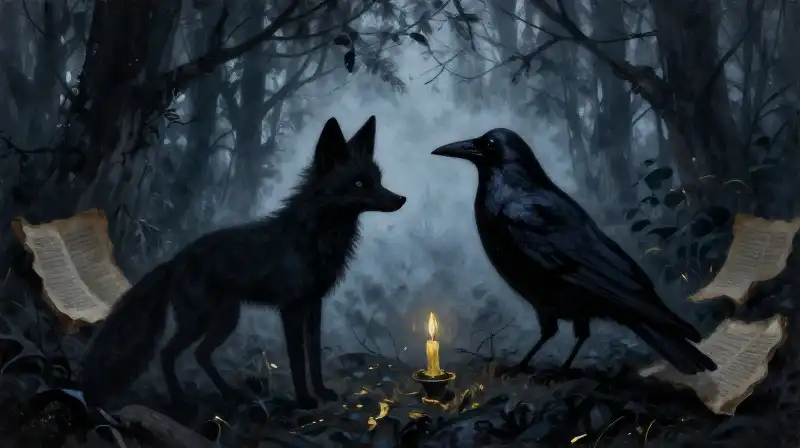
A lion, a lamb, and a wolf. These archetypal figures occupy a unique space in the human imagination, functioning simultaneously as biological realities and vessel-like symbols for human behavior. When we encounter a story where a tortoise outpaces a hare or a fox outwits a crow, we are engaging with the fable—a genre designed to strip away the complexities of social nuance and present the raw mechanics of morality through “humble incidents” [1, 3]. At the heart of this tradition is the name Aesop, a figure shrouded in the mists of antiquity who serves as the legendary architect of the Western fable [3].
While often dismissed as mere nursery tales, the Aesopic corpus is a sophisticated literary tool. These short, fictitious narratives use talking animals, birds, and insects to convey profound truths about power, greed, and wisdom [1, 3]. However, the relationship between these ancient Greek tales and the theological narratives of the Bible is more than just a matter of shared “moral of the story” structures. There is a profound tension between the way a fable instructs a reader to act and the way a sacred text may intend to transform a reader’s worldview [2]. Understanding this distinction is essential for anyone looking to move beyond a superficial reading of literature and into a deeper engagement with how stories shape our ethics.
The Myth of Aesop: Author or Label?
To understand Aesop, one must first understand that “Aesop” may be less a person and more a literary brand. Tradition casts him as a slave and storyteller in ancient Greece, active between 620 and 564 BCE [3]. Yet, modern scholarship suggests that the *Aesopica*—the collection of fables attributed to him—is not the work of a single hand [3]. Instead, the name “Aesop” likely functioned as a label for any fable that lacked a known author, much as “folk tale” denotes a shared cultural heritage rather than a specific copyright [3].
The transmission of these stories is a testament to the power of oral tradition. These tales were not formally collected into written volumes until approximately three centuries after the legendary Aesop’s death [3]. This delay allowed the stories to permeate global cultures, creating fascinating parallels with other traditions, such as the Indian Jataka tales and the Panchatantra [3]. Whether these similarities arose from direct influence or a shared human tendency to use animal allegory remains a subject of scholarly debate [3].
Comparative Craft: Fables, Parables, and Proverbs
The literary mechanics of the fable often lead readers to conflate them with other short-form didactic genres. While they share the goal of instruction, their execution and intent differ significantly. Some scholars even describe fables as “extended proverbs”—brief, pithy snapshots of a universal truth [3].
| Feature | Fable (Aesopic) | Parable (Biblical) | Proverb |
|---|---|---|---|
| Characters | Anthropomorphized animals or insects [1]. | Human beings in relatable social roles [1]. | N/A (Abstract or situational). |
| Primary Device | Allegory and “word pictures” to provoke thought [1]. | Metaphorical narrative intended to reveal spiritual truth [1]. | Brief, rhythmic, or pithy linguistic snapshots. |
| Core Function | To provide practical, worldly, or social wisdom [3]. | To illustrate divine principles or kingdom dynamics [1]. | To offer concise guidance on conduct. |
A striking literary parallel can be found in the thematic resonance between specific texts. For example, Aesop’s “The Kingdom of the Lion”—which depicts a failed attempt to establish universal peace between predators and prey—finds a prophetic echo in the biblical imagery of Isaiah 11:1-9, where a future state of peace is described as a wolf dwelling with a lamb [1]. While the fable offers a cautionary look at the difficulty of such peace, the biblical passage presents it as a divine promise, demonstrating how the same “word pictures” can serve vastly different theological ends [1].
Is Aesop’s Fables Religious?

A common question arises when readers encounter the overlap between Aesopic themes and religious teachings: Is Aesop’s fables religious? The answer lies in the distinction between content and intent. The fables themselves are secular in origin, rooted in the social and political observations of ancient Greece [3]. They were traditionally addressed to adults to navigate the complexities of human nature and power dynamics [3].
However, because the fables deal with universal morality, they have been integrated into religious education for centuries. From the Renaissance onward, they transitioned from adult political tools to primary educational instruments for children [3]. This integration has led to a specific way of reading religious texts, which requires careful nuance.
The Danger of the “Aesop’s Fables Bible”
In theological literary analysis, critics warn against a “moralistic” approach to sacred texts—a method sometimes called the “Aesop’s Fables Bible” approach [2]. This occurs when a reader treats biblical narratives as a mere collection of moralistic stories designed to teach how to be “good people” [2].
- The Moralistic Lens: Reading a story (like the Good Samaritan) as a template for human emulation—essentially asking, “How can I be like this character?” [2].
- The Christological Lens: Reading the same story through the lens of divine redemption—asking, “What does this story reveal about the nature of God and the human condition?” [2].
While Aesop aims to provide a roadmap for social survival and personal prudence, many theological traditions argue that the central purpose of their narratives is not merely to provide a list of “do’s and don’ts,” but to tell a larger story of redemption [2].
The Legacy of the Aesopic Tradition
The enduring power of Aesop lies in the simplicity of his craft. By using animals to mirror human vices and virtues, the fables provide a safe distance through which we can examine our own flaws without the immediate sting of direct accusation [1]. This tradition has been preserved and reshaped through various linguistic and cultural iterations:
- Latin Interpretations: The 1st-century CE works of Phaedrus brought the fables into the Roman literary tradition [3].
- Medieval Instruction: The “elegiac Romulus” became a staple teaching text in medieval Europe, cementing the fable’s role in pedagogy [3].
- Global Parallels: The structural similarities between the Aesopic tradition and Eastern wisdom literature suggest that the fable is a fundamental human response to the need for moral clarity [3].
Ultimately, whether we read Aesop for political insight, childhood education, or as a foil to theological study, his influence remains foundational. The fables remind us that the most profound truths are often found in the smallest, most unassuming characters, and that the stories we tell about animals often say the most about ourselves.
Sources

- Aesop | Our Daily Bread Ministries — ourdailybread.org
- The Danger of the Aesop’s Fables Bible — rootedministry.com
- Aesop’s Fables — en.wikipedia.org
Frequently Asked Questions
Is Aesop's fables religious?
The fables are secular in origin, rooted in the social and political observations of ancient Greece. However, because they deal with universal morality, they have been integrated into religious education for centuries.
Related Articles