Best Historical Novel Series: From Ancient Rome to the Frontier

The Architecture of Time: Navigating the Historical Novel Series
To read a historical novel series is to engage in a specific kind of temporal architecture. Unlike a standalone novel, which captures a single, crystalline moment of the past, a series allows an author to build a world through accumulation. We see the slow erosion of empires, the gradual shift of social mores, and the long-term consequences of individual decisions. For the reader, the appeal lies in the ability to inhabit a specific era until it feels less like a setting and more like a lived reality.
However, the term “historical fiction” is an expansive umbrella that covers vastly different literary intents. Some series function as sweeping political epics that trace the tectonic shifts of power, while others operate as intimate character studies or tightly wound mysteries set against a factual backdrop. Understanding these distinctions—the difference between the “ripping” narrative driven by legend and the meticulously researched chronicle—is the first step in finding a series that resonates with your own curiosity about the past.
Mapping the Genre: Scales and Styles
Before selecting a series, it is helpful to categorize them by their narrative focus. The genre does not move as a monolith; rather, it branches into specialized modes of storytelling. The following table outlines the primary ways authors approach historical continuity.
| Narrative Mode | Primary Focus | Representative Examples |
|---|---|---|
| The Political Epic | The macro-movements of statecraft, war, and the fall of institutions. | Colleen McCullough’s Masters of Rome [1]. |
| The Character-Driven Chronicle | Individual lives navigating the currents of history, often emphasizing psychological depth. | Hilary Mantel’s Cromwell books, starting with Wolf Hall [1]. |
| The Historical Whodunnit | Using a specific era as a container for mystery and investigation. | The Cadfael Chronicles or Peter Tremayne’s Sister Fedelma series [1]. |
| The Speculative Blend | Merging historical settings with fantasy or heightened mythic elements. | Andrzej Sapkowski’s Hussite Trilogy or Guy Gavriel Kay’s Byzantine-inspired works [1]. |
The Weight of Antiquity: Ancient Rome and the Mediterranean
For readers drawn to the foundational structures of Western civilization, the Roman era offers unparalleled narrative scale. The literature of this period often grapples with the tension between individual ambition and the inevitable decay of republican institutions.
- Political Grandeur: Colleen McCullough’s Masters of Rome series is a definitive work for those seeking to understand the complex machinery of the Roman Republic, tracing the era from Marius and Sulla through to the rise of Augustus [1].
- The Rogue and the Soldier: Not all Roman fiction is found in the Senate. For a more ground-level view, Lindsey Davis offers the adventures of the rogue Marcus Didius Falco, while Ruth Downie’s Medicus series provides a perspective from the edges of the empire through the eyes of an army doctor [1].
- Mythic and Fictionalized Settings: Authors like Guy Gavriel Kay use history as a springboard for something more lyrical; his works Sailing to Sarantium and Lord of Emperors evoke 6th-century Constantinople, blending historical texture with a more atmospheric, novelistic grace [1].
Medieval Shadows and Renaissance Power
The medieval period is frequently used to explore themes of faith, feudalism, and the birth of modern bureaucracy. The approach here often shifts between the sweeping drama of construction and the claustrophobic tension of courtly life.
Ken Follett’s The Pillars of the Earth stands as a monumental example of historical drama, focusing on the epic scale of medieval life [1]. In contrast, the genre often finds its most satisfying expressions in the “historical whodunnit.” These series, such as the Cadfael Chronicles, rely on extensive research to ensure the mystery is inseparable from the period’s social and religious constraints [1]. For those interested in the intersection of religion and crime, Peter Tremayne’s series featuring the nun Sister Fedelma provides a unique lens into medieval investigation [1].
Moving into the early modern era, authors like Philippa Gregory utilize “ripping stories”—narratives that lean into historical rumors and legends to drive momentum, as seen in her Plantagenet and Tudor novels like The White Queen [1].
Expanding Horizons: The Americas and Global Perspectives
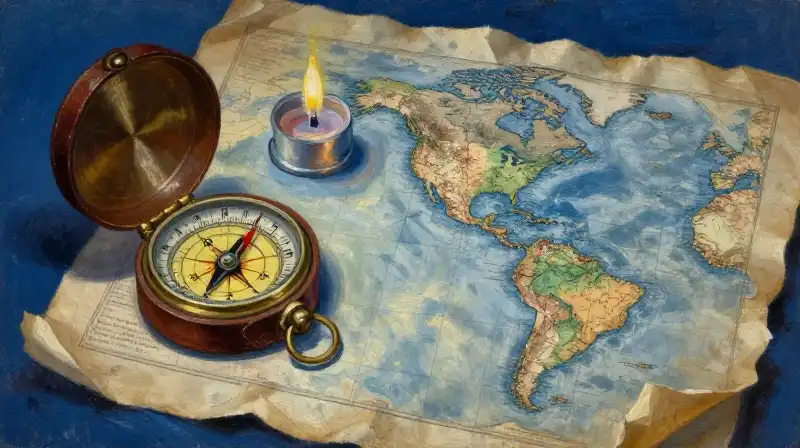
Historical fiction is not confined to the Old World. The genre has evolved to capture the expansionist energy of the Americas and the complex cultural collisions in Asia and Africa.
- The American Frontier: Allan Eckert’s “The Winning of America” series offers a sweeping look at westward expansion, covering eras from the life of Simon Kenton through the American Revolution and into the 1830s [1].
- Maritime and Military Mastery: For those interested in the technical and social rigor of the Napoleonic Wars, Patrick O’Brian’s Aubrey and Maturin series is considered a seminal work, providing an immersive look at the Royal Navy [1].
- Global Epochs: The genre’s scope is truly global. James Clavell’s explorations of Japan in Shogun and China in Tai Pan, alongside Christian Jacq’s Ramses series set in Egypt, demonstrate how historical fiction can serve as a gateway to vastly different cultural histories [1].
- American Intellectual Depth: Gore Vidal stands as a premier voice in American historical fiction, using works like Burr, Creation, and Lincoln to provide profound, often provocative, depth to the study of the American experience [1].
The Chronological Canvas: Techniques of Setting
One of the most fascinating ways authors handle historical time is through the technique of “geographical time.” Rather than following a single character, some authors choose a specific location and fictionalize its entire chronological timeline. Edward Rutherfurd is a master of this, as seen in Sarum, where the history of a single place is told from prehistory through the modern era [1]. This technique shifts the “protagonist” from a person to a place, allowing the reader to witness the layers of human history accumulating on the same soil.
Why the Historical Series Endures
Ultimately, the best historical novel series do more than merely recreate the past; they use the distance of time to illuminate the present. Whether through the political machinations of Rome, the religious mysteries of the Middle Ages, or the rugged expansion of the American frontier, these works allow us to see the patterns of human nature repeat across centuries. By grounding grand historical shifts in the specific, lived experiences of characters, these series transform “history” from a collection of dates into a vibrant, breathing, and deeply human narrative.
Sources
- Suggest me some historical fiction series : r/suggestmeabook — reddit.com
Frequently Asked Questions
What are the best historical novel series?
The article does not name specific series as the 'best,' but it highlights several notable examples across various modes. These include Colleen McCullough’s Masters of Rome, Hilary Mantel’s Cromwell books, and Patrick O'Brian's Aubrey and Maturin series.
Related Articles