Aesops Fables: Animal Archetypes, Moral Truths & Free Ebooks


Introduction
A dying Lion, stripped of his strength, finds himself surrounded not by mourners, but by subjects who sense his vulnerability and turn to aggression. As he watches his former admirers close in, he observes with a heavy heart, “This is a double death” [2]. This moment of dramatic tension is not merely a cruel twist of fate; it is the engine of the fable. In these brief, sharp narratives, the stakes are stripped of all ornament, leaving only the raw interaction between character and consequence.
The works attributed to Aesop, known as Aesop’s Fables, represent a foundational pillar of the fable and folklore genre [2]. While they are often categorized as simple children’s stories, they are actually sophisticated tools of social and moral observation. By utilizing anthropomorphized animals to mirror human flaws, Aesop created a literary shorthand that has endured for millennia. Whether through a pithy observation like “Only cowards insult dying majesty” or a complex study of social hierarchy [2], these stories provide a mirror to the complexities of human behavior through the accessible lens of the natural world [2].
The Mechanics of the Fable: Animal Archetypes and Moral Truths
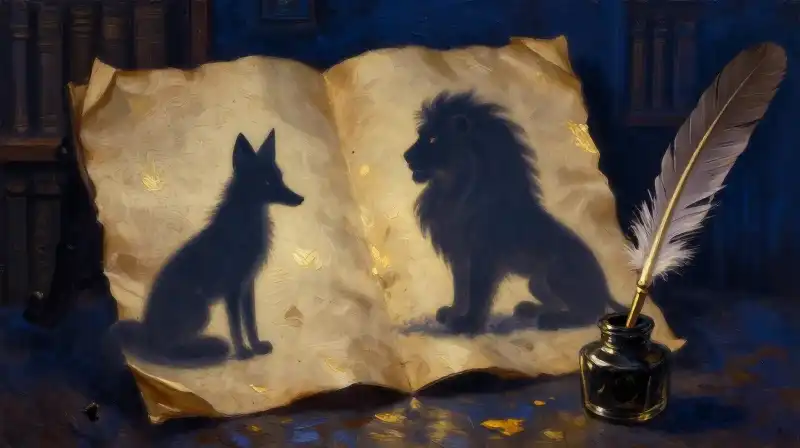
The power of Aesop’s Fables lies in their economy. The genre relies on specific narrative techniques to deliver its “moral of the story” with maximum impact, often using short, punchy prose to ensure the lesson is unforgettable [2]. At the heart of this technique is the use of animal archetypes.
Instead of describing a nuanced psychological profile of a greedy man, the fable presents a Fox. Instead of a boastful soldier, we see a Lion. This substitution allows the author to bypass the reader’s personal biases and address universal human truths. These archetypes serve several functions:
- Illustrating Human Flaws: Characters are often defined by a single, exaggerated trait. An Ass might represent cowardice, specifically when he chooses to insult a weakened Lion rather than showing respect [2].
- Highlighting Social Hierarchies: Fables often use scenes to juxtapose different behaviors and statuses. A narrative might contrast a well-fed, favored Ass with a boisterous Lapdog to illustrate the shifting dynamics of power and favor [2].
- Driving Plot through Status Shifts: The genre frequently employs sudden reversals in power. A leader who was once untouchable can become a target the moment they show vulnerability, a transition that drives the fable toward its moral conclusion [2].
Fable vs. Fairy Tale: A Distinguishable Difference
While often grouped together in casual conversation, fables and fairy tales serve different literary purposes. Understanding this distinction is key to appreciating the craft of the Aesopian tradition.
| Feature | Fable (Aesopian) | Fairy Tale |
|---|---|---|
| Primary Goal | To convey a specific moral or social lesson. | To entertain or explore magical/mythic themes. |
| Protagonists | Often anthropomorphized animals or archetypes. | Often humans (royalty, peasants, magical beings). |
| Narrative Structure | Brief, punchy, and driven toward a pithy conclusion. | Often expansive, involving long journeys and magic. |
| Resolution | The “moral of the story” provides the closure. | Usually a “happily ever after” or a magical resolution. |
Accessing the Classics: From Ancient Orality to Digital Archives
The transition of these ancient texts from oral tradition to the written word, and finally to the digital age, has ensured their continued relevance. For the modern reader, the barrier to entry is lower than ever. Digital preservation efforts, such as those by the Internet Archive, work to ensure these works of cultural heritage remain accessible for streaming and download [1].
For those looking for an Aesop’s fables ebook to begin their study, several platforms provide free and legal access. Sites like Planet eBook offer versions of these classics for free download, allowing readers to engage with the full text without cost [2]. This accessibility allows the fables to function as they always have: as a shared vocabulary of wisdom that transcends socioeconomic boundaries.
How to Approach Reading Aesop’s Fables
If you are approaching these stories for the first time—whether as a student of literature or a casual reader—consider these three layers of engagement:
- The Literal Level: What is happening in the scene? Follow the movements of the animals and the immediate conflict.
- The Archetypal Level: What does the animal represent? If a Lion is being attacked by his subjects, what does that say about the nature of power and the fragility of authority?
- The Moral Level: How does the “moral of the story” apply to human social structures? Look for the “pithy observation” that summarizes the encounter [2].
The Enduring Legacy of the Aesopian Voice
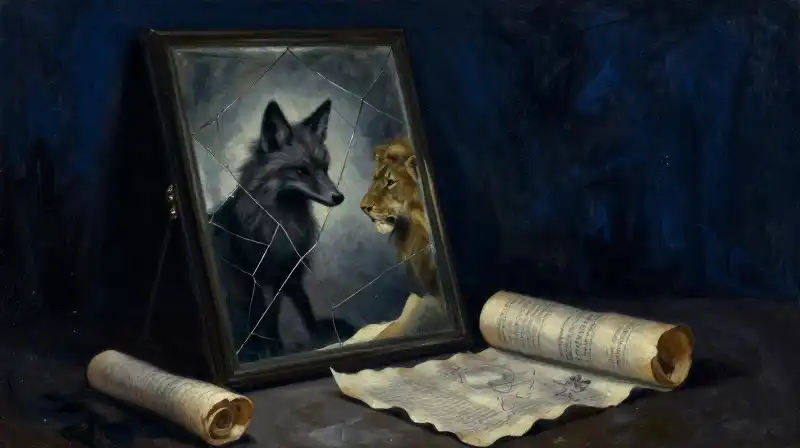
Aesop’s Fables remain remarkable because they do not rely on the complexity of setting or the depth of characterization to make their point. Instead, they rely on the precision of the archetype and the sharp edge of the moral truth. By stripping away the distractions of human identity, Aesop allows us to see our own cowardice, greed, and wisdom more clearly. The ability of these short, punchy narratives to hold a mirror to the shifting hierarchies of human society ensures that, even in a digital age, these ancient voices remain strikingly contemporary.
Sources
- Aesop’s fables : Aesop : Free Download, Borrow, and Streaming : Internet Archive — archive.org
- Aesop’s Fables — Download Free at Planet eBook — planetebook.com
Related Articles