
Modern vs. Postmodern Literature: Key Differences and Themes

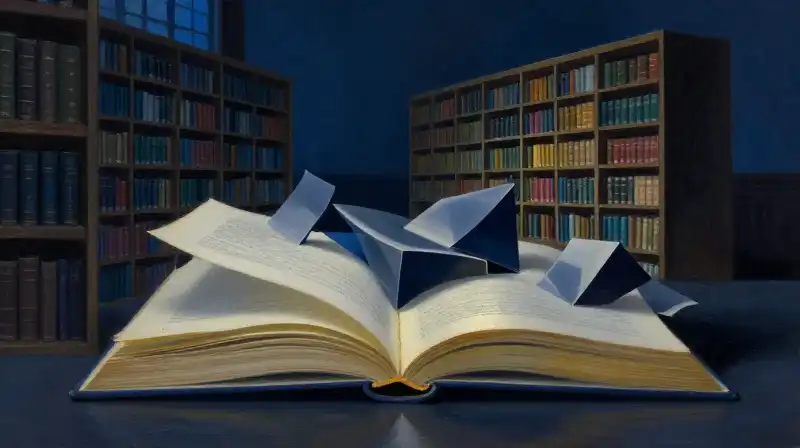
Introduction
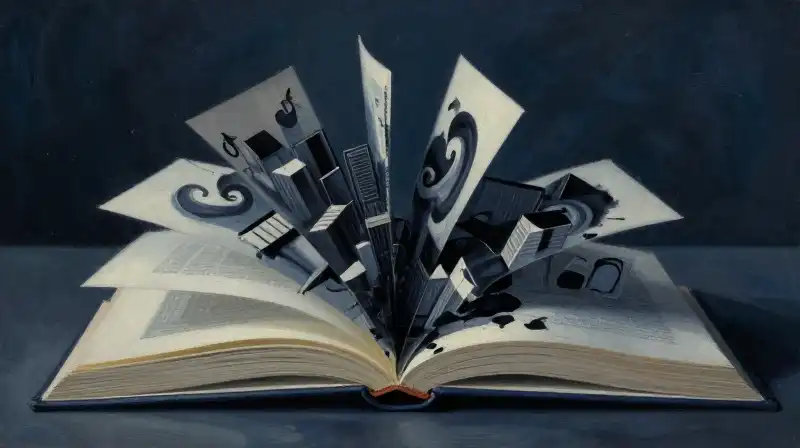
Imagine standing in the center of a crumbling cathedral. A modernist writer looks at the shattered stained glass and the fallen arches with a profound sense of loss, mourning the coherence of the structure and searching for some remaining fragment of truth among the ruins. A postmodern writer, however, might look at that same wreckage and decide to host a party in it, using the broken pieces to build something entirely new, irreverent, and perhaps intentionally nonsensical [2].
This distinction captures the fundamental tension between modernism and postmodernism. While they share a lineage of fragmentation and a departure from the tidy, linear storytelling of the 19th century, their psychological and philosophical motivations are worlds apart. To understand the shift from one to the other is to understand how our cultural relationship with “truth,” “reality,” and “meaning” underwent a radical transformation in the 20th century.
The Epistemological vs. The Ontological
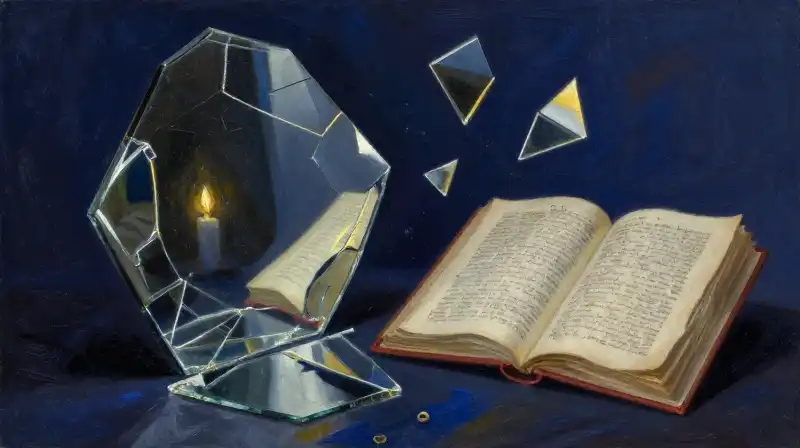
At the heart of the transition from modernism to postmodernism lies a shift in the types of questions literature seeks to answer. Scholars often distinguish the two movements by their primary intellectual focus: the epistemological versus the ontological [1].
- Modernism is Epistemological: It asks, “How can I know the world?” Modernist works often grapple with the limits of human perception and the difficulty of attaining objective truth. The focus is on the subject’s attempt to find meaning within a fractured reality.
- Postmodernism is Ontological: It asks, “Which world is this, and what is a ‘self’ within it?” Postmodernism moves beyond the struggle to know a single reality and begins to question the very nature of reality itself, often suggesting that there are multiple, equally valid, or equally illusory worlds occurring simultaneously [1].
This shift is best seen in how authors treat the concept of “the void.” A modernist author like T.S. Eliot, in The Waste Land, treats the fragmentation of Western culture with an elegiac, nostalgic tone, treating the chaos as a problem to be lamented or a crisis to be navigated [2]. In contrast, postmodernists tend to “frolic in the wreckage,” treating the collapse of “grand narratives”—the big, overarching stories like religion, progress, or science that once explained the world—with a sense of manic glee or dark humor [2].
Key Technical Hallmarks
While modernism introduced many of the tools that postmodernism would later refine, the application of these techniques differs in intent and execution. Postmodern literature is defined by several specific technical maneuvers [1, 3]:
Metafiction and Self-Reflexivity
Metafiction is “fiction about fiction.” It occurs when a story deliberately draws attention to its own artificiality. While a modernist might use a complex stream-of-consciousness to mirror the inner workings of a mind, a postmodernist uses metafiction to remind the reader that they are reading a constructed text. This self-reflexivity breaks the “illusion” of the story to explore the mechanics of storytelling itself.
Unreliable Narration and Subjectivity
Both movements embrace subjectivity, but postmodernism often pushes unreliability to an extreme. In postmodern works, the narrator may not just be biased; they may be fundamentally incapable of providing a stable ground for the reader, reflecting a world where no single perspective can claim authority [1].
Intertextuality and Pastiche
Postmodernism thrives on intertextuality—the way texts reference, echo, or dialogue with other texts. This often takes the form of pastiche, a technique of imitating various styles or genres. Crucially, postmodernism blurs the line between “high” and “low” culture [2, 3]. Where a modernist might lean heavily on difficult, learned references to classical antiquity, a postmodernist might place a reference to the Odyssey right alongside a reference to the Brady Bunch or a Bob Dylan song [2, 3].
Comparing the Movements
To visualize the practical differences in how these movements approach the craft of writing, consider the following comparison:
| Feature | Modernism | Postmodernism |
|---|---|---|
| Core Attitude | Tragic, elegiac, searching for order [2]. | Playful, ironic, embracing chaos [2]. |
| View of Fragmentation | A crisis or a problem to be solved [1]. | An inescapable condition to be played with [1]. |
| Cultural Focus | High culture, complex literary references [3]. | Blurring of high and low/pop culture [2, 3]. |
| Goal of Narrative | To explore the depth of human consciousness. | To challenge the concept of “reality” itself [3]. |
The Role of Hyperreality
A significant theme in postmodern thought is the concept of hyperreality—a state where the distinction between reality and its representation begins to dissolve [3]. In a hyperreal world, the “map” becomes more real to us than the “territory” it is supposed to represent. This is not just a literary concept but a cultural one, often explored in media that examines how simulations (media, advertising, digital interfaces) shape our perception of what is “real” [3]. We see echoes of this in contemporary narratives like The Matrix or The Truman Show, where the characters must navigate worlds that are entirely constructed through representation.
Representative Authors and Works
Navigating these movements requires looking at the authors who defined their boundaries. The transition is often marked by figures like Samuel Beckett, whose work, such as Waiting for Godot, helped move literature away from the linguistic celebrations of modernists like James Joyce and toward a focus on the “poverty of language” and the inherent failure of human communication [1].
Postmodern Masters
- Thomas Pynchon: Perhaps the definitive postmodernist. His work Gravity’s Rainbow is famous for its paranoia and dark humor, while The Crying of Lot 49 is often cited as a more accessible entry point into his labyrinthine style [2].
- Kurt Vonnegut: Known for using dark humor and science fiction elements to critique social structures and the absurdity of the human condition.
- Philip K. Dick: A master of exploring the breakdown of reality and the blurring lines between the human and the artificial.
- Kathy Acker: Noted for her use of metafiction and the subversion of traditional narrative structures.
- William Gaddis: A key figure in high-complexity postmodern prose.
Is Postmodern Literature Still Relevant?
A common question for contemporary readers is whether postmodernism has been surpassed by something else. While some argue we have moved into “metamodernism” or a new era of sincerity, the tools of postmodernism—irony, metafiction, and the questioning of grand narratives—remain deeply embedded in how we consume digital media, film, and literature. The postmodern skepticism toward “absolute truth” remains a defining characteristic of the modern information age.
Synthesis: Why the Distinction Matters
The shift from modernism to postmodernism is more than a change in literary style; it is a change in the human posture toward the universe. Modernism was the literature of the search—a desperate, beautiful attempt to find meaning in a world that had lost its traditional anchors. Postmodernism is the literature of the realization—the acknowledgment that the anchors were perhaps always illusions, and that in the absence of a central meaning, we are free to play, to parody, and to construct our own fragmented truths.
Sources
- Postmodern literature — en.wikipedia.org
- What the hell is postmodernism? : r/literature — reddit.com
- LibGuides at Ramapo Catskill Library System — guides.rcls.org
Frequently Asked Questions
Is postmodern literature still relevant today?
Yes, the tools of postmodernism, such as irony and metafiction, remain deeply embedded in how we consume film, literature, and digital media. Additionally, postmodern skepticism toward absolute truth continues to be a defining characteristic of the modern information age.
Is Judith Stacey a postmodernist?
The provided article does not contain information regarding Judith Stacey; therefore, her status as a postmodernist cannot be determined from this text.
Related Articles