
Batman and Watchmen: Exploring the Links Between Two Icons

Introduction
On the surface, Batman and the characters of Alan Moore’s Watchmen appear to inhabit entirely different literary universes. One is the quintessential pillar of the DC Multiverse, a symbol of justice and moral complexity; the other is a deconstruction of the superhero genre itself, set in a cynical, alternate history where the mask often obscures more than it reveals. Yet, the relationship between these two icons is far more symbiotic than it first appears. Through subtle visual cues in film, the meta-textual layers of graphic novels, and recent narrative crossovers, the boundary between the myth of the Dark Knight and the reality of the Watchmen world has become a fascinating site of literary and cinematic interplay.
Visual Echoes: The 2009 Film Adaptation
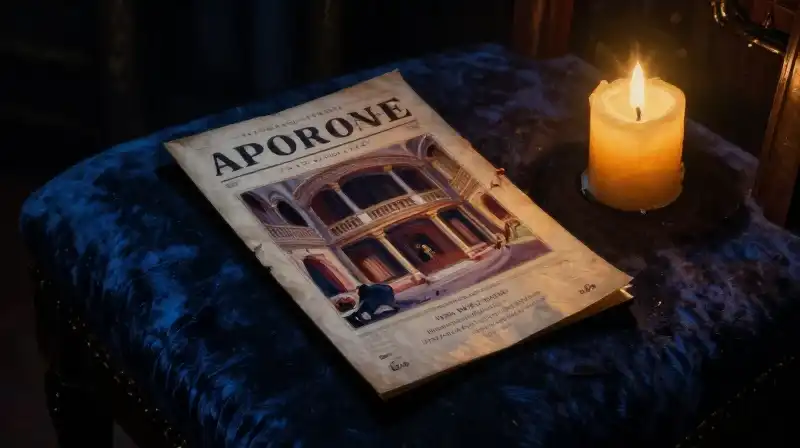
When Zack Snyder adapted Watchmen for the screen in 2009, he embedded a series of “poetic” homages that invited viewers to draw parallels between the tragic origins of the Watchmen characters and the legend of Bruce Wayne [1]. These are not mere Easter eggs for enthusiasts; they function as thematic bridges that connect the concept of the vigilante to the archetype of the fallen hero.
The opening credits of the film contain several significant nods to the Batman mythos:
- The Gotham Opera House: A subtle visual reference to the urban landscape of Batman’s home [1].
- Die Fledermaus: A playbill for this opera, which translates to “The Bat,” serves as a direct linguistic nod to the Caped Crusader [1, 3].
- The Mugging Sequence: A point of significant debate among viewers is whether the opening montage, depicting the mugging of a wealthy couple, represents the origin of Bruce Wayne. While some interpret the socialites as Thomas and Martha Wayne, others point to the presence of Batman posters in the background, suggesting that within this specific cinematic universe, Batman is a fictional character [1].
If we accept the reading that the mugging depicts the Waynes, the absence of a young Bruce Wayne in the shot may be a deliberate narrative choice intended to avoid the explicit depiction of child trauma while still invoking the weight of his loss [1]. In this sense, the film uses the shadow of Batman to deepen the sense of tragedy inherent in the Watchmen narrative.
The Meta-Textual Divide: Fiction vs. Reality
To understand the relationship between Batman and Watchmen, one must distinguish between the two different ways “superheroes” function in their respective continuities. In the mainstream DC Universe, Batman is a living, breathing reality. In the Watchmen universe, the concept of the superhero is fundamentally different.
| Feature | Mainstream DC Universe (Batman) | Watchmen Universe (Moore/Miller) |
|---|---|---|
| Status of Heroes | Real-life metahumans and vigilantes are part of the social fabric. | Real-life costumed heroes existed, causing superhero comic books to die out [1, 2]. |
| Role of Comics | Source of inspiration and media for the public. | Replaced by “pirate comics” like The Black Freighter after the era of true heroes [1, 2]. |
| The Archetype | Batman is the definitive, primary figure. | Characters like the original Nite Owl serve as de facto analogues to Batman—gadget-oriented, non-superpowered, and darkly dressed [1]. |
In the original Watchmen continuity, Batman is a fictional creation of Bob Kane and Bill Finger, appearing in Detective Comics #27 in 1939 [2]. The existence of such comic books in the Watchmen world is a distinct narrative element; the genre shifted because the “fantasy” of the masked hero was shattered by the messy, political reality of actual costumed vigilantes [1, 2].
Does Batman ever meet Rorschach?
For much of history, these two worlds remained strictly separated by the “fourth wall” of their respective continuities. However, the recent Doomsday Clock comic series serves as a literary bridge, bringing the Watchmen universe into the mainstream DC Multiverse [2].
While a direct, prolonged partnership between Batman and the original Rorschach is not the central focus, Doomsday Clock features a complex intersection of characters that brings these worlds into confrontation. Notably, the storyline features a version of the Comedian who engages in combat with both Batman and the Joker [2]. Furthermore, the narrative introduces an interaction between Batman and Rorschach II, a character in the new continuity, navigating a world shaped by the “Supermen Theory”—a conspiracy alleging that metahumans are government agents [2].
The Doomsday Clock: A Multiversal Collision
The Doomsday Clock arc provides the most substantive answer to how Batman and the Watchmen characters might coexist. Rather than a simple crossover, it is a deep exploration of how the presence of Watchmen characters affects the fundamental laws of the DC Multiverse [2].
Key plot elements in this intersection include:
- Temporal Anomalies: Batman encounters a mysterious “button” and a temporal anomaly that eventually leads to high-stakes confrontations involving Doctor Manhattan and the Flash [2].
- Political Tension: Batman must navigate a public landscape defined by growing distrust, where the line between hero and government tool has become dangerously blurred [2].
- Character Deconstruction: The story uses the intersection to test the morality of both worlds, forcing Batman to confront the darker, more nihilistic impulses embodied by the Watchmen legacy [2].
Synthesis: Why the Connection Matters
The link between Batman and Watchmen is more than a matter of shared iconography; it is a dialogue between two different philosophies of the superhero. Batman represents the possibility of the hero as a permanent, moral fixture of the human landscape. Watchmen represents the deconstruction of that possibility, suggesting that when the mask becomes a reality, the results are often political, messy, and tragic.
Whether through the “poetic” visual nods in Snyder’s film or the complex multiversal mechanics of Doomsday Clock, the interplay between these two properties allows readers and viewers to examine the very essence of what it means to be a hero. By contrasting the myth of the Bat with the reality of the Watchmen, we gain a deeper understanding of how the genre itself has evolved from simple morality plays into sophisticated explorations of power and identity.
Sources
- Batman references in Watchmen 2009 opening credits : r/DC_Cinematic — reddit.com
- Bruce Wayne | Watchmen Wiki | Fandom — watchmen.fandom.com
- How does Batman fit into the timeline of Watchmen? — scifi.stackexchange.com
Frequently Asked Questions
Is Watchmen connected to Batman?
Yes, the two are connected through poetic visual homages in Zack Snyder's 2009 film adaptation and through the Doomsday Clock comic series. These connections explore the relationship between the myth of the Dark Knight and the deconstructed reality of the Watchmen world.
Does Batman ever meet Rorschach?
In the Doomsday Clock series, Batman has an interaction with Rorschach II, a character in the new continuity. However, a direct and prolonged partnership between Batman and the original Rorschach is not the central focus of the narrative.
Related Articles