Aesops Most Famous Fables: Themes, Morals, and Origins

Introduction
A crow drops pebbles into a pitcher to raise the water level, a tortoise slowly outpaces a hare, and a fox turns his nose up at grapes he cannot reach. These vignettes are more than mere nursery tales; they are the foundational DNA of the Western fable. For centuries, the name “Aesop” has been synonymous with the short, punchy narrative designed to deliver a moral truth through the medium of anthropomorphic animals [1]. Yet, the man behind the mask remains elusive. While tradition casts him as a legendary Ancient Greek storyteller, many scholars question whether Aesop was a single historical individual or a composite figure, given the lack of concrete biographical evidence [1]. Regardless of his physical existence, the literary legacy attributed to him has shaped how we understand character, consequence, and the inherent nature of the world around us.
The Mechanics of the Fable: Anthropomorphism and Inherent Nature
The power of the Aesopian fable lies in its economy. There is no sprawling world-building or complex psychological interiority; instead, the genre relies on a specific set of literary tools to convey its message rapidly. The most prominent of these is anthropomorphism—the attribution of human traits, emotions, or intentions to non-human entities [1]. By using animals as proxies, the storyteller can bypass the defenses of the reader, allowing them to observe human failings and virtues from a safe, observational distance.
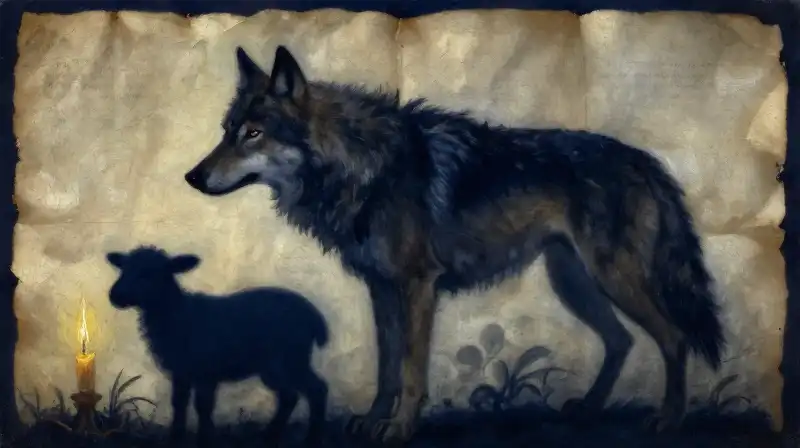
A recurring and sometimes controversial theme within these tales is the concept of inherent nature—the idea that a creature (and by extension, a person) is bound by their fundamental character. This is most clearly illustrated in “The Wolf & the Lamb,” where the wolf’s predation is presented not as a choice, but as an inevitability of his species [3]. While this provides a clear, sharp moral, some modern readers find this perspective provocative, as it mirrors social hierarchies where individuals are often judged or constrained by the categories into which they are placed [3].
Key Thematic Archetypes
Aesop’s fables generally fall into several thematic categories that address different aspects of the human experience:
- Intellect and Survival: Tales like “The Crow & the Pitcher” celebrate the triumph of wit over brute strength, suggesting that intelligence is a vital tool for overcoming physical limitations [3].
- Foresight and Industry: “The Ants & the Grasshopper” serves as a classic cautionary tale regarding preparation, contrasting the industriousness required for survival against the folly of immediate gratification [3].
- Social Dynamics and Deception: Works such as “The Boy Who Cried Wolf” (also known as The Shepherd Boy & the Wolf) or “The Wolf in Sheep’s Clothing” examine the breakdown of trust and the consequences of dishonesty [2].
- Temperament and Ego: “The Fox & the Grapes” explores the psychological mechanism of rationalization, where a character devalues an object simply because they cannot attain it—a concept that survives today in the idiom “sour grapes” [3].
Comparing the Fable to Related Genres
To understand the specific craft of the fable, it is helpful to distinguish it from other short-form narratives that often occupy the same shelf in a library.
| Feature | Fable | Fairy Tale | Parable |
|---|---|---|---|
| Primary Characters | Often anthropomorphic animals [1]. | Humans, royalty, or magical beings. | Human beings in everyday situations. |
| Central Goal | To teach a specific moral or social lesson [3]. | To entertain or explore archetypal journeys. | To illustrate a spiritual or philosophical truth. |
| Tone | Brief, direct, and often pragmatic [3]. | Whimsical, magical, or dark. | Serious, meditative, and instructional. |
Beyond Children’s Literature: The Adult Audience
While Aesop’s fables are a staple of early childhood education, viewing them strictly as children’s stories overlooks their original intent and complexity. Many scholars argue that these tales were intended for adults, as they grapple with the harsh realities of power, social injustice, and the complexities of moral ambiguity [3]. The fables often provide a cynical, realistic view of the world rather than a sanitized, idealistic one.
This tradition of using the fable to critique society has been carried forward by modern literary giants. For instance:
- James Thurber: In his collection Fables for Our Time, Thurber adopts a satirical tone, using the structure of the fable to lampoon modern social conventions rather than teaching traditional virtues [3].
- Franz Kafka: His work, such as “The Little Fable,” pushes the genre into the realm of the surreal and the existential. In Kafka’s hands, the fable’s simplicity becomes a tool for exploring grim, pragmatic, and often unsettling realities [3].
Frequently Asked Questions
What were three fables written by Aesop?
Among the most widely recognized are “The Tortoise & the Hare,” which teaches the value of persistence; “The Goose & the Golden Egg,” a warning against greed; and “The Town Mouse & the Country Mouse,” which explores the trade-offs between security and luxury [2].
What was Aesop’s disability?
Historical and legendary accounts often describe Aesop as having a physical disability, frequently cited as being a eunuch or having a limp, though these details are part of the folkloric tradition rather than verified historical fact [1].
The Enduring Relevance of the Aesopian Form
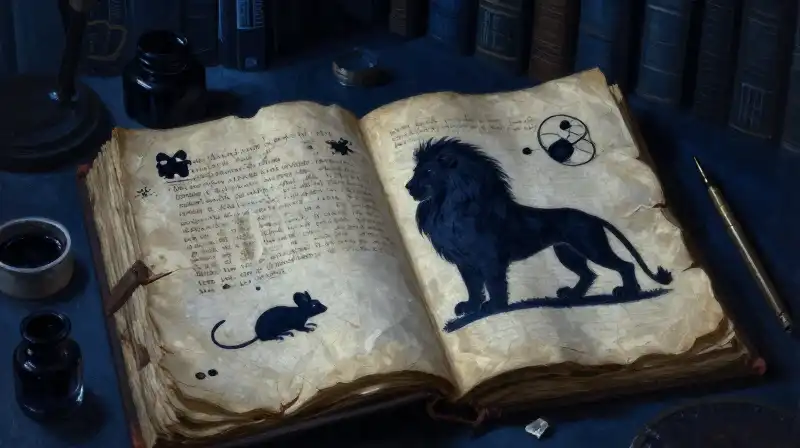
The reason Aesop’s most famous fables remain in our collective consciousness is not merely because of their brevity, but because of their precision. They act as a concentrated form of wisdom, stripping away the noise of complex prose to reveal a fundamental truth about how the world operates. Whether through the cautionary pragmatism of “Belling the Cat” or the unexpected kindness found in “The Lion & the Mouse,” these stories provide a universal vocabulary for discussing ethics, survival, and the human character [2, 3]. By translating complex social realities into the language of animals, Aesop created a mirror that remains as clear and piercing today as it was in antiquity.
Sources
- The Top 5 Aesop Fables That Everyone Should Know — robertjamesworkshop.com
- Library of Congress Aesop Fables — read.gov
- What Are Your Favourite Fables? : r/books — reddit.com
Frequently Asked Questions
What are three fables written by Aesop?
Three widely recognized fables are "The Tortoise & the Hare," "The Goose & the Golden Egg," and "The Town Mouse & the Country Mouse." Other mentioned examples include "The Crow & the Pitcher" and "The Ants & the Grasshopper."
What was Aesop's disability?
Historical and legendary accounts often describe Aesop as being a eunuch or having a limp. However, these details are considered part of folkloric tradition rather than verified historical fact.
Related Articles