
How does ScienceFiction Literatura handle planetary terraforming ethics

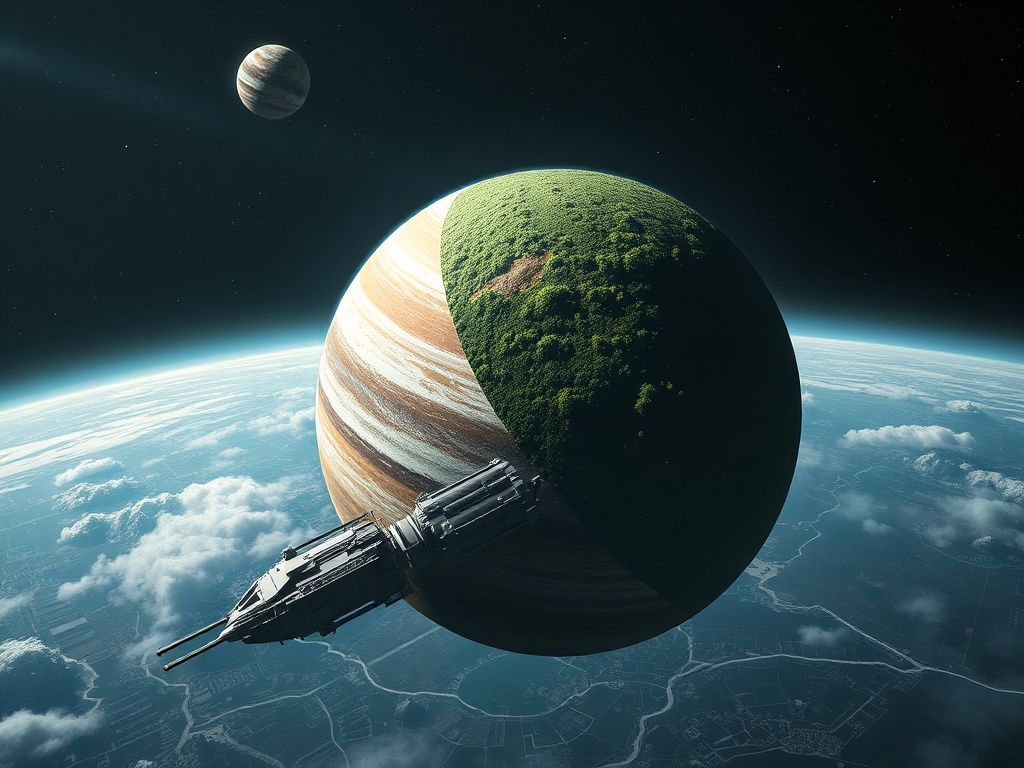
Science fiction, as a genre, has long grappled with the colossal ambition of planetary terraforming – transforming an alien world to be habitable for humans. This isn’t just a technological challenge; it raises a host of profound ethical dilemmas. From early pulp adventures showcasing humanity’s triumphant conquest of hostile environments to more nuanced contemporary narratives, sci-fi literature provides a fascinating, and often cautionary, exploration of the moral implications of reshaping entire worlds. The sheer scale of the undertaking forces authors to confront questions of ownership, environmental responsibility, and the potential for unforeseen consequences, making it fertile ground for philosophical debate and compelling storytelling.
The core of the ethical discussion often revolves around the question of whether humanity has the right to fundamentally alter another planet, even if that planet appears uninhabited. This inquiry is complicated by the possibility of undiscovered life, the inherent value of existing ecosystems, and the potential for unintended ecological disasters. Science fiction literature, unlike scientific proposals, frequently focuses on the human and societal impact of such projects, exploring the psychological toll on colonists, the power dynamics that emerge, and the philosophical justifications offered for actions with potentially irreversible impacts. The genre’s ability to imagine future scenarios allows for a critical examination of our present values and biases through the lens of radical technological possibility.
## The Assumption of Empty Worlds
Much early science fiction regarding terraforming operated under a significant assumption: that any planet targeted for modification was inherently empty. This allowed for straightforward narratives of conquest and colonization, justifying the alteration of the landscape for human benefit. Authors like Jack Williamson in The Humanoids explored these themes, but often without deeply questioning the inherent right to displace any potential existing microbial life or ecosystems. The focus was squarely on the triumph of human ingenuity and adaptability, portraying terraforming as a positive, even heroic, endeavor.
However, even within this framework, seeds of doubt could be found. Some narratives implicitly acknowledge that assuming a world is entirely devoid of life is a dangerous oversimplification. The fear of discovering sentient life, or complex ecosystems initially undetected, begins to surface, creating internal conflict for characters and hinting at the hubris of unchecked ambition. The narrative often benefits from a sudden, inconvenient discovery, dramatically shifting the ethical landscape.
This prevalent assumption gradually began to erode as science fiction evolved, influenced by growing environmental awareness on Earth. Modern works are far less likely to accept the premise of an inherently “blank slate” planet, prompting a re-evaluation of terraforming’s ethical foundations. The prevailing narrative now shifts to incorporating considerations of unseen life and the fragility of potential ecosystems.
## The Rights of Potential Indigenous Life
As the genre matured, sci-fi increasingly addressed the possibility of existing, though perhaps microscopic, life forms on target planets. This presented a significant ethical hurdle: if life exists, even in a rudimentary form, does humanity have the right to terraform the planet and potentially wipe it out? This concern highlights the importance of biodiversity and the potential for undiscovered complexity within seemingly barren environments. Stories like Ursula K. Le Guin’s The Dispossessed subtly question the justification for imposing human standards of habitability on other worlds.
The core debate centers on the concept of sentience and its correlation with rights. Is any form of life deserving of protection, regardless of its complexity? Or does the right to terraform rest upon the demonstrated presence of intelligent life capable of suffering? This leads to considerations of pre-emptive preservation and the potential for discovering latent, unexpected forms of intelligence. A common trope involves the discovery of microscopic organisms that, while not conventionally sentient, play a crucial role in the planet’s ecosystem.
Ultimately, many sci-fi narratives demonstrate the precariousness of assuming superiority and the dangers of prioritizing human needs over the preservation of alien life. The consequences of such hubris are often depicted in devastating terms, showcasing the irreversible loss of unique biological systems and the moral culpability of the terraforming project. The loss is not just biological, but frequently spiritual, representing a diminishment of the universe’s diversity.
## Ecological Responsibility and Unforeseen Consequences
Beyond the immediate question of existing life, sci-fi often explores the long-term ecological consequences of terraforming. The process is rarely depicted as simple or predictable. Even with advanced technology, introducing new species and radically altering atmospheric conditions can lead to cascading effects and unforeseen disruptions to the planetary ecosystem. Kim Stanley Robinson’s Mars Trilogy is a prime example, portraying the painstaking and often frustrating process of creating a stable Martian biosphere.
The potential for ecological collapse is a recurring theme, often stemming from arrogance or insufficient understanding of the complex interactions within the planetary environment. Even well-intentioned projects can backfire spectacularly, leading to runaway climate change, the extinction of newly introduced species, or the emergence of entirely new and harmful organisms. The notion of a “perfect” terraformed world proves to be an illusion, replaced by a fragile and constantly evolving system requiring constant vigilance.
This perspective emphasizes the need for humility and a precautionary approach to terraforming. Sci-fi highlights the importance of thorough research, careful planning, and the acceptance that even the most sophisticated models are inherently imperfect. The long-term impact on the planet’s habitability must be a priority, even if it compromises the speed or scope of the transformation.
## Colonist Rights and Social Justice on Newly Formed Worlds
The ethical considerations extend beyond the planetary ecosystem to encompass the rights and welfare of the human colonists themselves. Terraforming projects are often depicted as driven by corporate interests or political agendas, potentially leading to exploitation and social inequality on newly formed worlds. The struggle for autonomy and self-determination becomes a central theme, as colonists push back against oppressive regimes or corporate control.
Many narratives explore the creation of rigid social hierarchies on terraformed planets, with the original terraformers or corporate employees holding disproportionate power and resources. This mirrors historical patterns of colonization and exploitation on Earth, prompting a critical examination of power dynamics and the potential for repeating past mistakes. The challenge lies in establishing just and equitable societies on these new frontiers, ensuring that all colonists have the opportunity to thrive.
The psychological toll of terraforming is also frequently explored. Living on a deliberately altered planet, knowing that one’s environment is an artificial construct, can lead to feelings of alienation and a questioning of identity. The adaptation process is not always successful, and the stories often explore the breakdown of human psychology under the stresses of a new and potentially hostile environment.
## Conclusion
Science fiction literature has moved far beyond the simplistic depictions of terraforming as a straightforward triumph of human ingenuity. The genre now consistently interrogates the profound ethical implications of reshaping entire worlds, forcing us to confront complex questions of responsibility, respect for life, and the potential for unintended consequences. Early narratives often glossed over these dilemmas, focused on the technological achievement itself, but contemporary sci-fi offers a much more nuanced and critical perspective.
By exploring the potential pitfalls of terraforming, science fiction serves as a cautionary tale about our relationship with the natural world, both on Earth and beyond. The genre’s power lies in its ability to imagine future scenarios and to use those scenarios to illuminate our present values and biases. Ultimately, it challenges us to consider the long-term consequences of our actions and to strive for a more ethical and sustainable approach to planetary exploration and colonization.
Related Articles