
Best Dystopian Books: From Orwell to The Hunger Games

Introduction
To read a utopia is to look through a window at a perfected world; to read a dystopia is to watch that window shatter. While utopian literature seeks to imagine a flawless society, the dystopian genre functions as its thematic inverse, presenting life and culture at their absolute worst [2]. It is a genre of warning, often centered on the crushing weight of an oppressive regime or the unchecked hand of a tyrant [2]. From the surveillance-heavy corridors of mid-century political warnings to the high-stakes survivalism of modern young adult sagas, dystopian fiction asks a singular, terrifying “what if” that forces us to examine the fragility of our own social contracts.
The Foundations: Totalitarianism and the Loss of Self
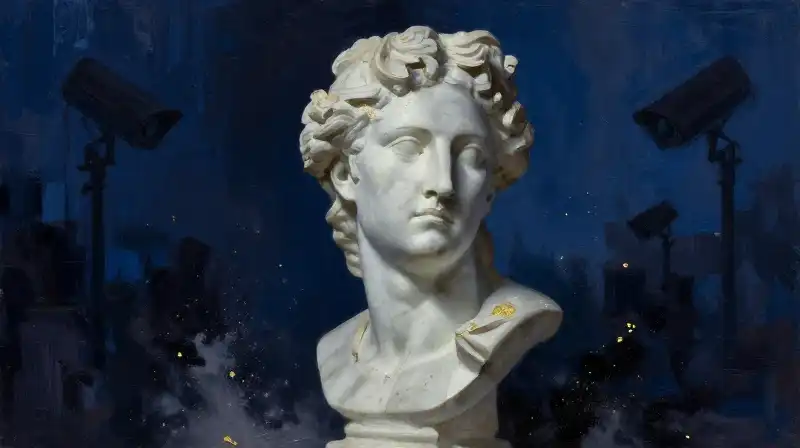
The modern scaffolding of the genre was built upon the anxieties of the 20th century, specifically the rise of authoritarianism and the mechanization of human life. These seminal works moved beyond mere adventure to explore how systems of power can systematically erase the individual.
- George Orwell, 1984: Perhaps the most enduring archetype of the genre, Orwell explores the terrifying potential of a state that monitors not just actions, but thoughts. Through the concept of “Big Brother,” Orwell examines how language and surveillance are used to dismantle the very concept of objective truth.
- Aldous Huxley, Brave New World: Where Orwell feared pain and censorship, Huxley feared pleasure and distraction. This work explores a “soft” totalitarianism where stability is maintained through biological engineering and sensory gratification, presenting a chilling alternative to the blunt force of a police state [2].
- Yevgeny Zamyatin, We: A crucial precursor to the genre, Zamyatin’s work examines a mathematical, transparent society where individuality is viewed as a disease [1, 2].
- Ray Bradbury, Fahrenheit 451: Bradbury focuses on the destruction of culture and intellect, depicting a world where books are burned to maintain a shallow, unthinking social harmony [1, 2].
The Evolution of the Genre: Subgenres and Tones
Dystopian fiction is not a monolith. As the genre has evolved, it has splintered into various subgenres that use different narrative engines to explore social decay. A reader looking for “good dystopian books” will find that the tone can shift from the clinical to the romantic, or from the political to the surreal.
| Subgenre | Primary Focus | Representative Works |
|---|---|---|
| Young Adult (YA) | High-stakes tension, underdog narratives, and rebellion against social hierarchies [2]. | The Hunger Games (Suzanne Collins), Uglies (Scott Westerfeld), Divergent (Veronica Roth) |
| Hard Science Fiction | Complex scientific concepts, often involving consciousness or technological limits [1, 2]. | Blindsight (Peter Watts) |
| Post-Apocalyptic | Environmental collapse or the aftermath of a pandemic/civilization-ending event [1, 2]. | Station Eleven (Emily St. John Mandel) |
| Romantasy/Contemporary | Intersections of dystopian settings with romantic tension or magical realism [1, 2]. | Matched (Ally Condie), The Measure (Nikki Erlick) |
The YA Dystopia: Rebellion and Identity
In Young Adult literature, the genre often utilizes the “underdog” trope to explore the transition from childhood to autonomy. In Suzanne Collins’ The Hunger Games, the struggle is a visceral fight against a regime that uses televised violence to maintain control [2]. Similarly, Scott Westerfeld’s Uglies trilogy uses a dystopian setting to critique societal pressures regarding physical perfection and mandated surgical procedures [2]. These narratives often rely on social stratification—such as the faction system in Veronica Roth’s Divergent—to create clear, high-stakes conflicts for their protagonists [2].
The “Weird” and the Philosophical
Contemporary dystopian fiction has moved toward more experimental “weird” premises. Rather than just political coups, some modern authors explore the erosion of the human essence itself. Peng Shepherd’s The Book of M, for instance, investigates the loss of memory and even shadows, moving the genre into more surreal territory [2]. Others, like Neal Shusterman in his Scythe series, present moral dilemmas through a lens of abundance: in a world where humanity has conquered death, the struggle becomes the “art” of managing a growing population through sanctioned killing [2].
Navigating the Genre: A Reading Guide
Because the genre spans from heavy political indictments to fast-paced YA adventures, choosing where to start depends on what kind of “dystopia” you wish to experience. If you are looking for the best dystopian novels for young adults or teens, the path is often defined by high-octane pacing and identity formation. For adults, the path often leads toward political intrigue or philosophical inquiry.
For the Beginner: The Classic Entry Points
- Start with Fahrenheit 451: It is often the most accessible entry point into the “warning” aspect of the genre due to its vivid imagery and relatively straightforward prose.
- Move to 1984: Once you understand the mechanics of a controlled society, Orwell provides the definitive study of how power maintains itself.
- Transition to The Hunger Games: This allows you to see how the classic themes of totalitarianism are translated into modern, character-driven pacing.
For the Experienced Reader: Exploring Nuance
If you find the standard tropes of “rebellion against the state” too familiar, look toward works that shift the perspective. Some narratives focus on a “normal person” experiencing an unsettling, slow-burn change in their world [1], while others, like Ray Nayler’s Where the Axe is Buried, dive into complex political intrigue and modern indictments of authority [2]. If you prefer atmospheric, character-driven prose over plot-heavy tension, Emily St. John Mandel’s Station Eleven offers a haunting look at what remains of humanity after the system has already collapsed [1, 2].
The Value of the Dark Future
Dystopian literature is frequently criticized for being “bleak,” but its purpose is rarely to induce despair. Instead, these works serve as a mirror. By pushing a current social trend—whether it be technological dependency, environmental neglect, or political polarization—to its absolute extreme, authors allow us to see the edges of our own reality. Whether it is the hard sci-fi questioning of consciousness in Blindsight or the magical realism of The Measure, the genre matters because it demands that we look closely at the world we are currently building. It asks us to consider not just what might happen, but what we must do to ensure it doesn’t.
Sources
- I need new dystopian books : r/booksuggestions — reddit.com
- 20 Dystopian Books That Will Keep You Up All Night — rachelagreco.com
Related Articles