
Best Sci-Fi Dystopian Books: From Orwell to Octavia Butler

Introduction
To read dystopian fiction is to engage in a controlled exercise of anxiety. Unlike utopian literature, which seeks to map the perfectibility of human systems, dystopia functions as its “almost exact opposite” [2]. It is a genre built upon the realization of a society’s greatest fears, presenting worlds that are oppressive, frightening, and fundamentally broken [2]. While the genre often utilizes the trappings of science fiction—advanced technology, space travel, or biological engineering—its true engine is social commentary. It asks not just “what if this technology existed?” but “what will this technology do to our humanity?”
For the reader, the appeal of the best sci-fi dystopian books lies in their ability to hold a mirror to the present. By exaggerating current political, environmental, or social trends, these narratives strip away the comforts of the status quo to reveal the fragile scaffolding of our own civilization. Whether through the lens of a totalitarian state or a crumbling ecosystem, these stories demand that we look closely at the trajectories of our own world.
The Pillars of the Genre: Totalitarianism and Control
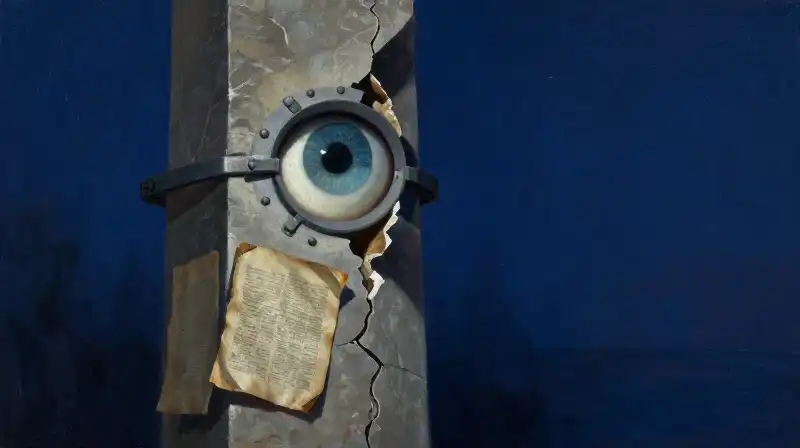
The landscape of dystopian literature is anchored by two monumental works that defined the parameters of political oppression. To understand the genre, one must first understand the divergent ways in which control is exerted over the individual.
| Work | Author | Mechanism of Control | Core Philosophical Inquiry |
|---|---|---|---|
| 1984 | George Orwell | Surveillance, linguistic restriction (Newspeak), and physical terror. | Can truth exist if the state controls language and memory? |
| Brave New World | Aldous Huxley | Hedonism, biological conditioning, and pharmacological escapism. | Is a painless, stable society worth the loss of individual agency and suffering? |
Orwell’s 1984 presents a world of scarcity and fear, where the state maintains power through the constant threat of violence and the erasure of history. Huxley’s Brave New World offers a more insidious warning: a society so saturated with pleasure and distraction that the citizens no longer desire freedom. While Orwell feared those who would ban books, Huxley feared a world where no one wanted to read them [1].
Expanding the Horizon: Social, Environmental, and Identity-Based Dystopias
As the genre has matured, it has moved beyond the singular focus on the centralized “Big Brother” state to explore more nuanced and terrifyingly plausible disruptions. Modern authors have utilized the dystopian framework to examine race, climate change, and the very definition of personhood.
The Anthropocene and Ecological Collapse
A significant subgenre has emerged focusing on the impacts of environmental degradation. This “cli-fi” approach moves the antagonist from a political dictator to the biosphere itself. J.G. Ballard’s The Drowned World is a foundational example, focusing heavily on the transformative and devastating impacts of climate change [1]. Similarly, Margaret Atwood’s MaddAddam trilogy and Oryx and Crake explore speculative futures where biological engineering and ecological collapse collide, creating worlds that feel uncomfortably close to our own [1].
Class, Caste, and the Human Soul
Other writers use the genre to deconstruct social hierarchies and the ethics of existence:
- Octavia Butler: In Parable of the Sower, Butler presents a chillingly realistic vision of a near-future America fractured by climate change and social collapse. Her work is noted for its disturbingly plausible setting, making the societal breakdown feel less like fantasy and more like an inevitable consequence of current trends [1].
- N.K. Jemisin: The Fifth Season offers an incredible, high-stakes landscape that is dark and twisted, using a broken world to explore deep-seated systemic oppression [1].
- Pierce Brown: The Red Rising series shifts the scale to Mars, utilizing a dystopian setting to perform a visceral exploration of an oppressive caste system [1].
- Philip K. Dick: Works like Do Androids Dream of Electric Sheep? pivot toward philosophical inquiry, using the sci-fi setting to question the boundary between the organic and the artificial, and what it fundamentally means to be alive [1].
Common Reader Inquiries
What are some good dystopian sci-fi books?
If you are looking for a starting point, the choice depends on the “flavor” of dystopia you prefer. For political grit, start with Orwell. For a more visceral, modern social critique, Octavia Butler’s Parable of the Sower is essential. If you prefer high-concept world-building with social tension, N.K. Jemisin’s work is highly recommended. For those who enjoy “harder” science alongside their societal warnings, works like Wool or the speculative biology of Margaret Atwood provide a more grounded, technical foundation [1].
The Craft of Dystopian World-Building
Writing effective dystopian fiction requires a delicate balance between the “speculative” and the “relatable.” If a world is too alien, the reader cannot feel the stakes; if it is too similar to our own, the sense of dread evaporates. Successful authors use several key techniques to ground their worlds:
- The “Small-Scale” Perspective: Instead of explaining the entire history of a fallen empire, authors often ground the narrative in the sensory details of a single character’s life—the taste of synthetic food, the sound of a surveillance drone, or the texture of a forbidden book.
- The Logic of Oppression: A dystopia must be internally consistent. The mechanisms of control—whether they are religious, technological, or economic—must follow a logic that, while horrific, makes sense within the context of the world’s history.
- The Use of Contrast: Many of the most effective works, such as the Night Watch hexalogy by Sergei Lukyanenko, blend genres—incorporating elements of fantasy or horror—to create “cerebral world-building” that keeps the reader off-balance [1].
Why Dystopia Matters
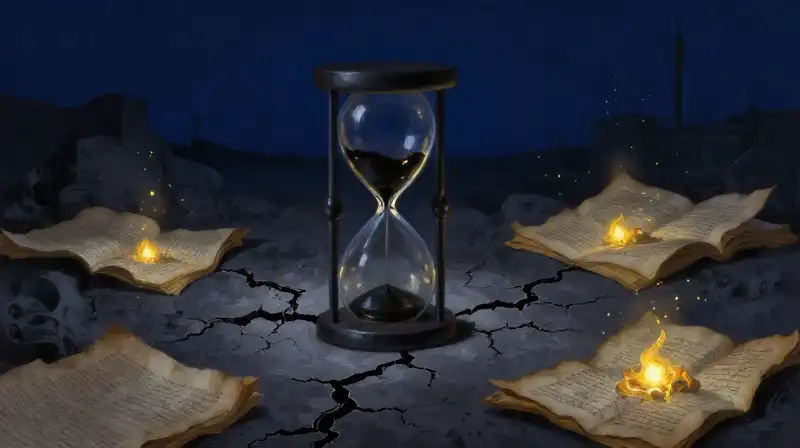
Dystopian literature is often dismissed as mere pessimism, but its purpose is more constructive than that suggests. By projecting our current anxieties into the future, these books function as a form of literary early warning system. They do not merely predict a dark future; they interrogate the choices, technologies, and social structures that make such a future possible. Whether it is the caste systems of Pierce Brown or the ecological warnings of J.G. Ballard, the genre compels us to recognize that the “broken” societies we read about are not inevitable, but are the results of human agency—and thus, they can be prevented.
Sources
- Suggest me a dystopian sci-fi/fantasy that will make my jaw drop! : r/suggestmeabook — reddit.com
- LibGuides at San Antonio Public Library — guides.mysapl.org
Frequently Asked Questions
What are some good dystopian sci-fi books?
Recommendations depend on your preferred style, such as George Orwell for political grit or Octavia Butler's "Parable of the Sower" for modern social critique. For high-concept social tension, N.K. Jemisin is recommended, while Margaret Atwood's work provides a grounded, technical foundation through speculative biology.
Related Articles