Classic Horror Literature: From Gothic Roots to Psychological Terror

Introduction
Horror is often misunderstood as a mere pursuit of the “jump scare” or the visceral shock of the macabre. In its most enduring literary forms, however, horror functions as a profound inquiry into the boundaries of the self and the stability of reality. To study classic horror literature is to trace a lineage of shadows—from the crumbling, superstitious castles of the 18th-century Gothic tradition to the fractured, internal landscapes of 20th-century psychological suspense. These works do not merely aim to frighten; they aim to unsettle, using the supernatural or the monstrous to articulate anxieties that the “real” world often struggles to name.
The Gothic Foundations: Architecture and the Supernatural
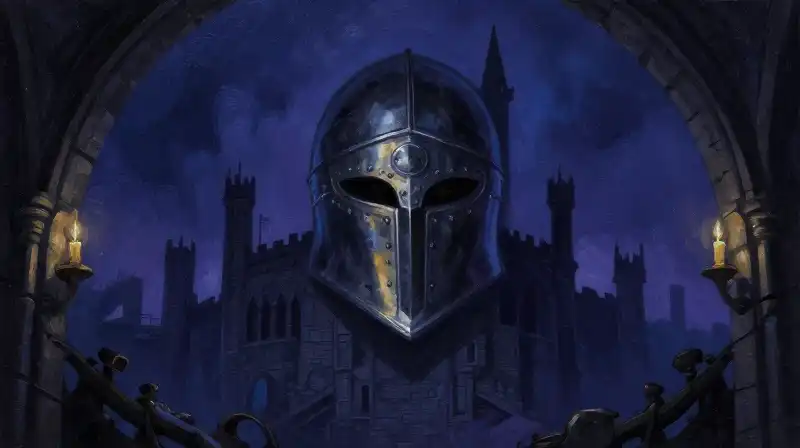
The architecture of modern horror is built upon the Gothic tradition. This movement established the essential tropes of the genre: isolation, decaying settings, and the intrusion of the past into the present. Horace Walpole’s The Castle of Otranto serves as the foundational blueprint, often cited as the first Gothic horror novel [2]. Walpole introduced a sense of high melodrama and sudden, inexplicable supernatural intervention—exemplified by the jarring image of an heir being crushed by a massive, sentient helmet—that would define the genre’s early aesthetic [2].
As the genre evolved, it moved from the external spectacle of haunted castles to the internal terror of the human condition. This transition is best observed in the way different subgenres utilize atmosphere to achieve different ends:
- Atmospheric Gothic: Focuses on the “haunted house” as a character in itself. Henry James’s The Turn of the Screw utilizes this to create a “labyrinth of lies,” where the reader is left to wonder if the hauntings are objective realities or projections of a fractured psyche [2].
- Scientific Horror: Emerged when the supernatural met the burgeoning sciences of the 19th century. Mary Shelley’s Frankenstein is the seminal text here, effectively inventing the intersection of science fiction and horror by exploring the consequences of playing God [2].
- The Dual Self: Explores the “man’s war with itself” through the lens of biology and morality. Robert Louis Stevenson’s Strange Case of Dr Jekyll and Mr Hyde uses the medical advancements of his era to dramatize the terrifying duality of human nature [2].
The Evolution of the Monster: From Vampires to Cosmic Dread
The “monster” in classic horror literature is rarely a static entity; it is a vessel for cultural fears. The evolution of these figures tracks the changing anxieties of the societies that produced them.
The Vampiric Archetype
The vampire subgenre provides a clear line of descent from the predatory to the seductive. Early works like John William Polidori’s The Vampyre laid the groundwork, but it was Sheridan Le Fanu’s Carmilla that added layers of complexity, notably becoming a celebrated work of gay fiction [2]. This trajectory reached a peak of “good vs. evil” structural clarity in Bram Stoker’s Dracula, where the struggle between the ancient, predatory Count and characters like Lucy Westenra represents a traditional battle for the soul of humanity [2].
Modernism and the Shift to the Psychological
As literature moved into the 20th century, the source of horror shifted from the external monster to the internal mind and the vast, indifferent universe. This era saw the rise of several distinct modes:
- Cosmic Horror: Popularized by H.P. Lovecraft, this mode suggests that true horror lies in the insignificance of humanity in the face of vast, unknowable, and ancient cosmic forces.
- Psychological Suspense: Authors like Shirley Jackson, Robert Bloch (notably in Psycho), and Ira Levin (in Rosemary’s Baby) moved the terror into the domestic and the mental, finding horror in the neighbors, the home, and the subconscious [1].
- Stylistic Elegance: Some classic works prioritize prose as a tool of unease. Oscar Wilde’s The Picture of Dorian Gray uses a tale of narcissism and moral decay to showcase unparalleled wit and linguistic beauty, proving that horror can be as much about aesthetic perfection as it is about terror [2].
Contrasting Modes of Horror
To understand how these works function, it is helpful to distinguish between the various ways horror engages the reader’s senses and intellect.
| Mode | Primary Source of Fear | Narrative Focus | Representative Examples |
|---|---|---|---|
| Gothic Horror | The Past / The Unknown | Atmosphere, setting, and melodrama [2] | The Castle of Otranto, The Turn of the Screw |
| Psychological Horror | The Self / The Mind | Isolation, loss of agency, and mental instability [2] | “The Yellow Wallpaper,” The Haunting of Hill House |
| Cosmic Horror | The Infinite / The Indifferent | Existential dread and the unknown [1] | Lovecraftian fiction |
The Craft of Dread: Key Literary Techniques
Horror writers employ specific craft techniques to bypass the reader’s rational defenses. Understanding these can help a reader appreciate the precision behind the “scare.”
Isolation and the Loss of Agency
A recurring theme in psychological horror is the stripping away of a character’s control. Charlotte Perkins Gilman’s “The Yellow Wallpaper” is a masterclass in this, using an autobiographical lens to depict the horror of a woman being confined and controlled by her physician-husband [2]. The terror does not come from a ghost, but from the systematic erasure of the protagonist’s autonomy.
The Labyrinth of Ambiguity
The most effective horror often refuses to provide a clear resolution. When a narrative functions as a “labyrinth of lies,” such as in Henry James’s work, the reader is forced into a state of epistemological uncertainty—they cannot trust what they see or what the narrator tells them [2]. This ambiguity transforms the act of reading into an act of survival, as the reader tries to find footing in a shifting reality.
Why Classic Horror Matters
Classic horror literature remains essential because it provides a structured way to confront the unstructured fears of life. Whether through the short, punchy dread of Edgar Allan Poe’s “The Tell-Tale Heart,” the atmospheric tension of Washington Irving’s “The Legend of Sleepy Hollow,” or the experimental, structural unsettling of modern works like Mark Z. Danielewski’s House of Leaves [1], the genre constantly reinvents itself to meet the anxieties of its time. By studying these works, we do not just learn how to be afraid; we learn how literature can map the darkest corners of human experience and bring them into the light of understanding.
Sources
- What book(s) would you consider “classic” horror? : r/horrorlit — reddit.com
- My Top 10 Classic Horror Novels — happygoathorror.com
Related Articles