
Science Fiction Explained: From Frankenstein to the Short Story

Introduction
When Mary Shelley’s Frankenstein first appeared in 1818, it did more than just unsettle readers with the image of a stitched-together creature; it provided a new template for how literature could interrogate the consequences of human ingenuity [2]. By placing a character’s actions within the framework of scientific possibility rather than pure magic, Shelley helped pivot storytelling toward a mode of speculative inquiry that would eventually become known as science fiction. Today, the genre is a vast, often contradictory landscape, ranging from the laser-focused physics of a “hard” science fiction story to the sprawling, star-spanning adventures of a space opera [2]. At its core, however, science fiction remains a way of asking “what if?”—using the laboratory, the starship, or the digital interface to hold a mirror up to the human condition [1].
Defining the Speculative: What is Science Fiction?
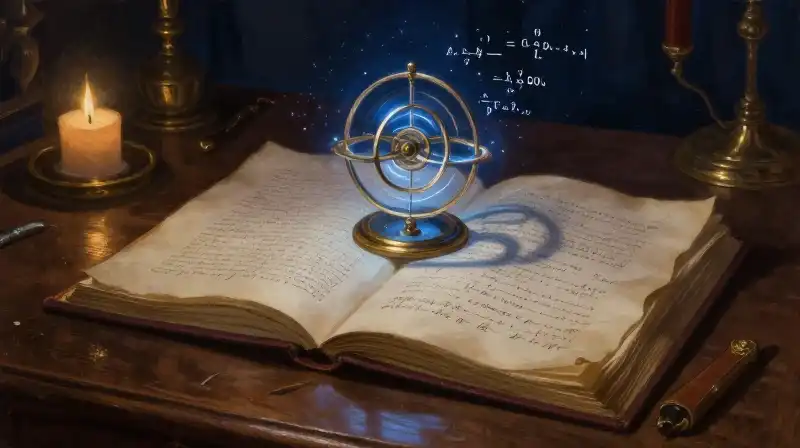
Because science fiction (or SF) deals with the boundaries of the possible, its definition is frequently a subject of debate among critics and practitioners. Some see it as a strict adherence to logic, while others see it as a playground for the imagination. Two of the genre’s most influential figures offered distinct, yet complementary, perspectives on what defines the work:
- Isaac Asimov: Defined the genre by the human element, viewing it as the study of how human beings react to changes brought about by science and technology [2].
- Robert A. Heinlein: Emphasized the “realistic” aspect, describing it as speculation about future events that remains solidly grounded in an adequate knowledge of the real world [2].
While these definitions highlight different priorities—one psychological, one empirical—they both suggest that science fiction is not merely about gadgets or aliens. It is about the friction between progress and the people living through it.
The Taxonomy of the Future: Exploring Subgenres
To navigate science fiction is to navigate a complex web of subgenres, each with its own set of “rules” and thematic focuses. Understanding these distinctions helps readers identify whether they are seeking a technical puzzle or a social commentary [2].
| Subgenre | Primary Focus | Core Characteristic |
|---|---|---|
| Hard Science Fiction | Technical Accuracy | Prioritizes scientific and mathematical rigor; the “science” is the engine of the plot [2]. |
| Soft Science Fiction | Social Sciences | Focuses on psychology, sociology, or anthropology rather than the mechanics of physics [2]. |
| Space Opera | Adventure and Scale | Emphasizes grand-scale conflict, interstellar empires, and heroic journeys [2]. |
| Cyberpunk | Tech-Society Interface | Explores the intersection of high technology and low life, often in dystopian urban settings [2]. |
| Climate Fiction (Cli-Fi) | Environmental Issues | Addresses the consequences of climate change and ecological shifts [2]. |
The Power of the Short Form
While many readers associate the genre with massive, multi-volume series, the science fiction short story has long been considered an ideal medium for the genre. The constraints of the short story force a writer to focus on a single, concentrated concept—a “novum”—without the narrative burden of fleshing out an entire universe’s history, which can sometimes dilute the impact of a central idea [3].
Some of the most enduring works of the genre are found in this condensed format. For instance, Isaac Asimov’s “The Last Question” is frequently cited as a masterpiece because it takes a massive, cosmic inquiry and distills it into a singular, devastating arc [3]. Similarly, Ray Bradbury’s “There Will Come Soft Rains” uses a post-human setting to evoke profound melancholy through imagery rather than dialogue [3].
Modern masters like Ted Chiang have refined this craft, demonstrating how to take highly abstract or “strange” concepts—such as a society that processes thought through pneumatic tubes—and make them feel grounded and “alive” through economical, imaginative prose [3]. This ability to make the impossible feel intimate is the hallmark of great speculative short fiction.
From the Golden Age to Contemplative Exploration
The trajectory of science fiction has moved from a celebration of progress to a more nuanced, often cautionary, examination of existence. During the “Golden Age of Science Fiction,” which began around 1937 under the editorship of John W. Campbell, the genre was largely characterized by a sense of optimism regarding scientific achievement [2]. Stories during this era often looked toward the stars with a sense of wonder and the belief that technology would solve human problems.
However, the genre has always possessed a dual nature. It can offer “rip-roaring escapism” through the spectacle of space battles and futuristic warfare, or it can provide “contemplative exploration” [1]. The latter uses the “extraordinary” as a tool to examine the “ordinary” essence of humanity. We see this in the works of authors who use speculative settings to tackle deeply philosophical or even religious themes:
- Arthur C. Clarke: In “The Nine Billion Names of God,” Clarke uses the completion of a religious ritual to explore the intersection of mathematics and divinity [3].
- Ursula K. Le Guin: In “The Ones Who Walk Away from Omelas,” Le Guin uses a utopian setting to conduct a devastating moral thought experiment regarding the cost of happiness [3].
Why Science Fiction Matters
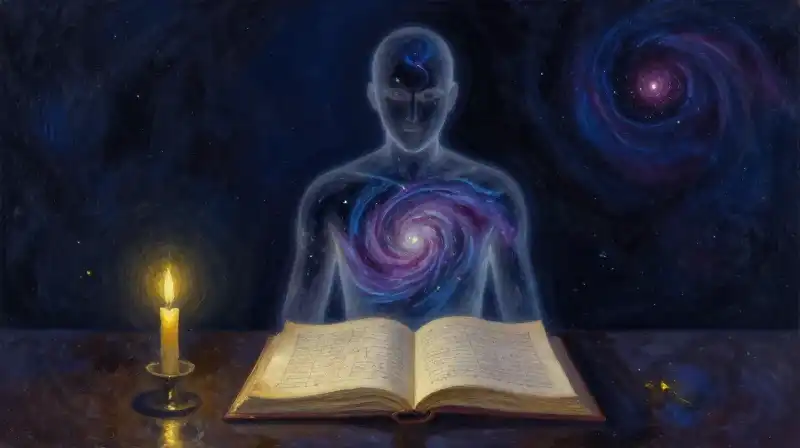
Science fiction is often dismissed as mere fantasy, but its value lies in its ability to act as a laboratory for the human soul. By stripping away the familiar—by moving us to a different planet, a different century, or a different biological state—the genre forces us to confront our values without the distractions of our current social norms. Whether it is exploring transhumanism, environmental fragility, or the very definition of consciousness, science fiction provides the distance necessary to see ourselves more clearly. It is not just a way of dreaming about what might be; it is a way of understanding what we are [1, 2].
Sources
- 150+ Best Sci-Fi Short Stories to Read Online for Free — reedsy.com
- Science fiction — en.wikipedia.org
- What are the best scifi short stories? : r/scifi — reddit.com
Related Articles