
Space Fiction Books: From Hard Science to Epic Space Operas

The Architecture of the Void
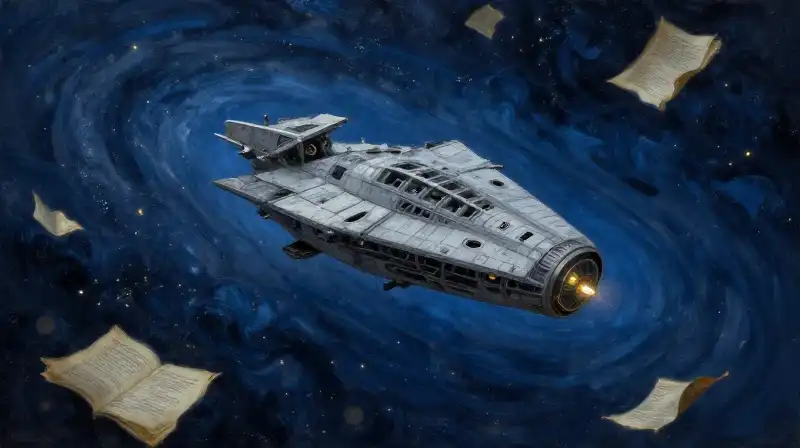
To read space fiction is to engage in a dual act of imagination: one must simultaneously contemplate the terrifying vastness of the vacuum and the intimate, often fragile, mechanics of the vessels—and minds—that traverse it. Readers often approach the genre with a specific hunger, seeking more than just a backdrop of twinkling lights. They are looking for the “sense of discovery”—that specific, breathless moment when a protagonist encounters a new realm of physics, an alien ecosystem, or a structure so massive it defies terrestrial comprehension [1].
The genre is not a monolith. It exists on a spectrum that stretches from the “hard” science fiction of technical survival to the sweeping, character-driven expanses of the space opera. While one reader may find satisfaction in the precise chemical equations required to survive a Martian dust storm, another may seek the anthropological depth of a culture shaped by interstellar travel. Understanding these distinctions is the key to navigating the cosmos of literature.
Mapping the Cosmic Spectrum
Space fiction is often categorized by its relationship with scientific reality and its narrative scale. To help orient your reading, we can distinguish between the primary modes of the genre:
| Subgenre | Primary Focus | Key Narrative Driver |
|---|---|---|
| Hard Science Fiction | Scientific accuracy, physics, and technical problem-solving. | The tension between human ingenuity and the laws of nature. |
| Space Opera | Epic scale, political intrigue, and high adventure. | Large-scale conflict, heroic journeys, and expansive world-building. |
| Anthropological/Social SF | Sociology, linguistics, and the evolution of culture. | How alien environments or technologies reshape human identity. |
| Speculative/High-Concept | Grand ideas, massive structures, and “big physics.” | The philosophical implications of encountering the unknown. |
The Precision of the Real: Hard Science Fiction
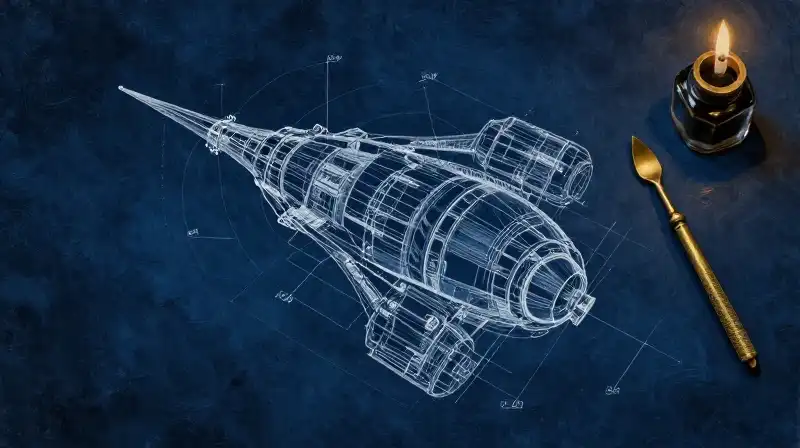
For many, the appeal of space fiction lies in its proximity to reality. “Hard” science fiction does not use space as a mere stage; it treats the environment as a primary antagonist. In these works, the vacuum is not just empty—it is lethal, governed by rigid mathematical certainties.
Andy Weir has become a contemporary standard-bearer for this mode. In The Martian, the narrative tension is derived from technical descriptions of Martian life and the granular reality of human habitation [1]. The “science” is not decorative; it is the engine of the plot. Similarly, Project Hail Mary maintains this balance, pairing solid physics with a narrative momentum that prevents the technical details from becoming a dry recitation [1]. For those interested in more gritty, contemporary takes on technical survival, Devon Eriksen’s Theft of Fire offers a focused look at these themes [1].
The Majesty of Scale: Space Opera and High Concept
If hard science fiction is about the micro-details of survival, the space opera is about the macro-details of existence. These stories often trade technical minutiae for sweeping plots and “big idea” settings.
The Grand Adventure
Space opera often prioritizes adventure and character-driven momentum. Works like Dan Simmons’ Hyperion or Vernor Vinge’s A Fire Upon the Deep utilize the vastness of space to stage epic conflicts [1]. The Red Rising series also occupies this territory, focusing on high-stakes drama and intense pacing [1]. For a lighter, more subversive take on the tropes of interstellar travel, Douglas Adams’ The Hitchhiker’s Guide to the Galaxy remains the foundational text for comedic space fiction [1].
Speculative Physics and Megastructures
There is a specific subset of science fiction that focuses on the awe of the impossible made tangible. This involves “high-concept” settings—massive, artificial structures that challenge our understanding of engineering and physics. Larry Niven’s Ringworld is a seminal example, exploring the implications of a world built on a cosmic scale [1]. Other authors, such as Alistair Reynolds in Revelation Space, or Frederik Pohl in Gateway, delve into the mysteries of Dyson spheres and other massive, enigmatic constructs that turn the universe into a playground of speculative physics [1].
The Human (and Non-Human) Element: Anthropology and Exploration
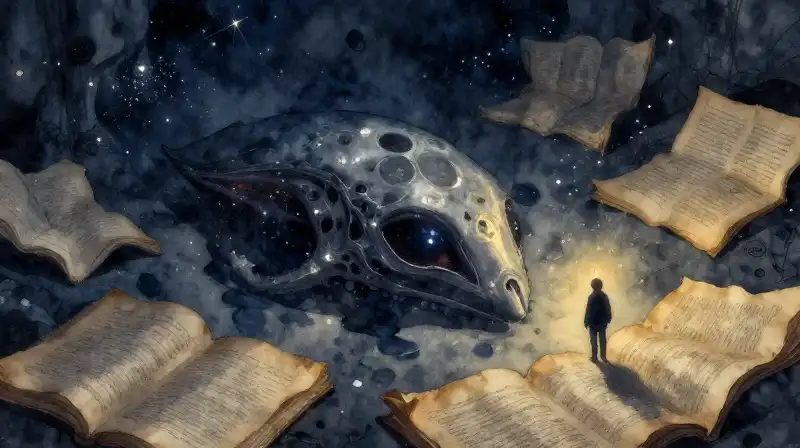
Beyond the hardware of spaceships and the physics of black holes lies the question of what space does to the soul and the society. This is the “anthropological” side of the genre.
- Cultural Evolution: Ursula K. Le Guin’s Hainish cycle is a masterwork of this approach, focusing on how novel social constructions and cultures emerge across the stars [1]. Her work often moves with a “dreamlike” quality, prioritizing the psychological and social over the purely mechanical [1].
- The Sense of Discovery: Arthur C. Clarke’s Rendezvous with Rama is noted for its ability to capture the pure, unadulterated awe of encountering an unknown object [1]. It focuses on the mystery of the “other” rather than the mechanics of the encounter.
- Intimate Exploration: For readers who prefer a more concentrated, character-focused study of discovery, Becky Chambers’ To Be Taught If Fortunate offers a poignant look at the search for habitable worlds [1].
- Complex World-Building: Adrian Tchaikovsky’s Children of Time and Peter F. Hamilton’s Pandora Star trilogy are frequently recommended for their ability to create immersive, deeply layered civilizations that feel lived-in and biologically plausible [1].
What Makes a Good Sci-Fi Book?
A common question for new readers is: What is a good SciFi book? The answer depends entirely on what you want the science to do for the story. A “good” book in this genre usually succeeds in one of three ways:
- Internal Consistency: Even if the physics are impossible, the rules of the world must be respected. Whether it is the hard science of Andy Weir or the speculative physics of Larry Niven, the world must feel coherent [1].
- Emotional Resonance: Space is vast and indifferent. A successful book uses that indifference to highlight human connection, whether through the gritty character studies of Richard K. Morgan’s Altered Carbon or the social explorations of Le Guin [1].
- The Sense of Wonder: The genre is uniquely positioned to trigger “awe.” A good space book should make the reader feel small, not in a way that diminishes them, but in a way that expands their sense of what is possible [1].
The Enduring Pull of the Stars

Space fiction matters because it serves as a laboratory for the human condition. By stripping away the familiarities of Earth—our gravity, our atmosphere, our social certainties—authors can isolate the core elements of what it means to be sentient. Whether through the technical rigor of a survivalist narrative or the sweeping political maneuvers of a space opera, these stories allow us to test our values against the infinite. We read about the stars not to escape our world, but to better understand our place within the larger, more complex machinery of the universe.
Sources
- Looking for any sort of space book that satisfies my sense of discovery and adventure. : r/scifi — reddit.com
Frequently Asked Questions
What is a good SciFi book?
A good SciFi book depends on what the reader wants the science to do for the story, but typically succeeds through internal consistency, emotional resonance, or a sense of wonder. It must respect its own established rules, highlight human connection against the vastness of space, or expand the reader's sense of what is possible.
Related Articles