
Frank Herbert’s The Lazarus Effect: Ecology, Cloning, and Chaos

The Ocean of Consciousness: Understanding The Lazarus Effect
To many readers, the name Frank Herbert conjures the sweeping, desert-hewn political machinations of Dune. However, tucked within his bibliography lies a much stranger, more fluid sequence of works known as the Destination: Void universe—a series that trades sand for sea and imperial lineage for biological abstraction [2]. At the center of this departure is The Lazarus Effect (1983), a collaborative effort between Herbert and poet Bill Ransom that pushes the boundaries of science fiction toward the psychedelic and the ecological [1].
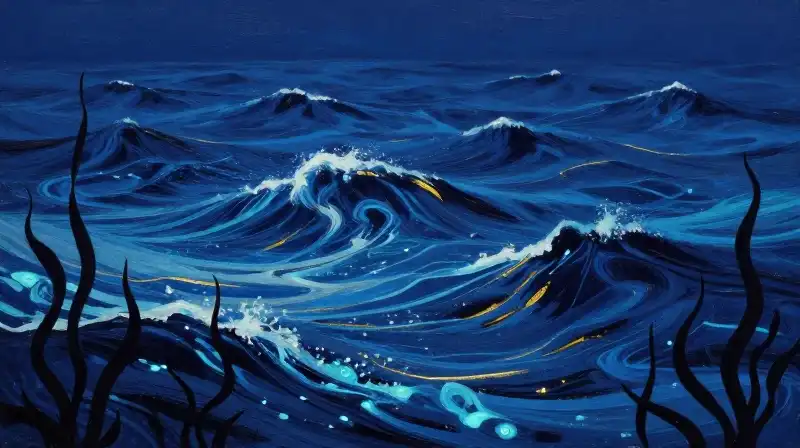
Set on the ocean world of Pandora, centuries after the events of The Jesus Incident, the novel presents a planet in flux. The once-dominant sentient kelp that shaped the world’s ecology has nearly vanished, leaving behind a landscape of unstable currents and submerged landmasses [1]. This is not a story of space opera conquest, but of a world struggling to find its center as biological and technological systems collide. For those asking, “What is the Lazarus Effect book about?”, the answer lies in the tension between two fractured human cultures and the terrifyingly beautiful reawakening of a planetary consciousness [1].
A World Divided: The Sociology of Pandora
The setting of The Lazarus Effect is as much a character as the humans who inhabit it. The division of society on Pandora serves as a canvas for exploring how environment and technology dictate human evolution and social structure [1].
- The Islanders: Living on bioengineered floating islands, this culture is defined by its precariousness. They struggle with the biological consequences of their survival, specifically genetic instability stemming from their reliance on cloning [1].
- The Mermen: In stark contrast, the Mermen inhabit advanced underwater cities. They represent a pinnacle of technological and medical achievement, maintaining a standard of living that feels detached from the ecological chaos above [1].
- The Avata: The true heart of the planet is the intelligent, sentient kelp known as Avata. As the novel progresses, this organism begins to reawaken and communicate, acting as a catalyst for the planet’s transformation [1].
Ecology, Cloning, and the Ghost in the Machine
While the plot is propelled by the political ambitions of figures like GeLaar Gallow—a revolutionary leader of the “Green Dashers” seeking to seize control of critical infrastructure [1]—the novel’s true weight is found in its thematic explorations. Herbert and Ransom move beyond simple conflict to examine the deeper implications of biological existence.
The Ethics of Genetic Engineering
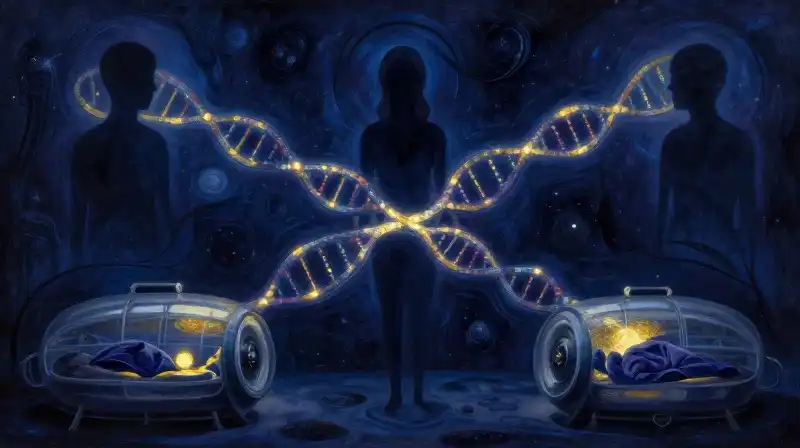
The reliance on cloning within the Islander community provides a lens through which the authors examine the fragility of identity. When life is a repeatable, engineered product, the concept of the individual begins to erode. This theme is mirrored in the struggle for control over the “Ship,” a sentient vessel whose hibernation tanks represent a vital, yet contested, resource for human survival [1].
The Shared Mind
Perhaps the most radical element of the work is its treatment of group consciousness. The novel moves toward a climax where the boundaries between individual beings and the planetary ecosystem dissolve. This is most vividly realized in the conclusion, where the Avata (the sentient kelp) begins to absorb certain characters into its distributed, shared mind, such as the human-kelp hybrid Vata and the Islander Chief Justice Ward Keel [1]. It is a conclusion that asks whether the survival of “humanity” is possible only through the surrender of the individual self to a larger biological whole.
Style and Reception: The Ransom Influence
Readers often find The Lazarus Effect to be a distinct departure from the prose style of Dune. This is largely due to the influence of co-author Bill Ransom, whose poetic sensibility infuses the text with abstract descriptions and a different cadence of dialogue [2].
This stylistic shift has resulted in a polarized reception among the science fiction community. To understand why this book feels so different, it is helpful to contrast its reception with Herbert’s more traditional works:
| Aspect | Traditional Herbert (e.g., Dune) | The Destination: Void Series |
|---|---|---|
| Primary Focus | Political intrigue, feudalism, and ecology | Biological abstraction, group consciousness, and mysticism [2] |
| Prose Style | Dense, analytical, and grounded | Abstract, poetic, and occasionally hallucinatory [2] |
| Reader Experience | Epic world-building and character arcs | Often described as a “slog” due to character development or abstract nature [2] |
Critics like Dave Langford have noted that The Lazarus Effect is “far better than its predecessor,” suggesting a refinement of the ideas introduced in The Jesus Incident [1]. However, some readers find the characters difficult to relate to, as the narrative often prioritizes the overwhelming scale of the planetary consciousness over personal, human-centric stakes [2].
Why the Lazarus Effect Matters
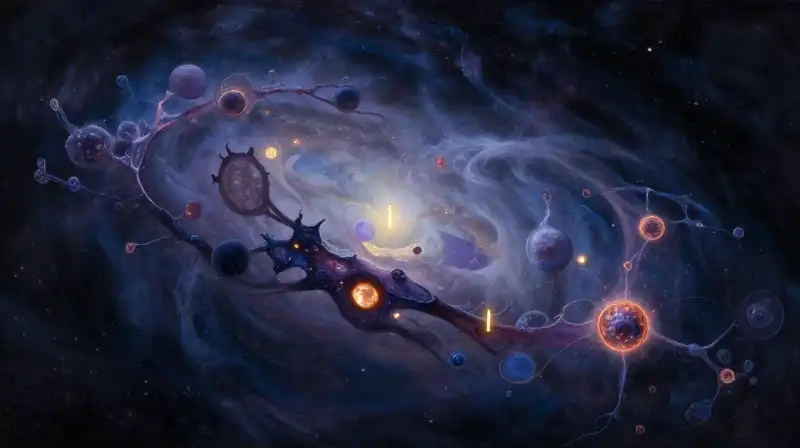
The Lazarus Effect remains a fascinating anomaly in the history of science fiction. It stands as an ambitious, if polarizing, attempt to merge hard science fiction themes—such as genetic engineering and artificial intelligence—with a deeply mystical, almost religious exploration of ecology [1]. It challenges the reader to move past the comfort of the individual hero and consider the terrifying possibility of a world where the “self” is merely a cell in a larger, planetary organism. Even for those who find the pacing difficult, the work remains a vital piece of literature for understanding Herbert’s willingness to abandon his own established formulas in pursuit of more difficult, abstract truths.
Sources
- The Lazarus Effect (novel) — en.wikipedia.org
- To those who have read The Jesus Incident: anybody else think it kinda sucked? : r/dune — reddit.com
Frequently Asked Questions
What is the Lazarus Effect book about?
The book explores the tension between two fractured human cultures and the terrifyingly beautiful reawakening of a planetary consciousness on the ocean world of Pandora. It examines the collision of biological and technological systems as the planet's sentient kelp begins to reawaken.
Related Articles