

What makes Anton Chekhov's plays realistic in Literatura

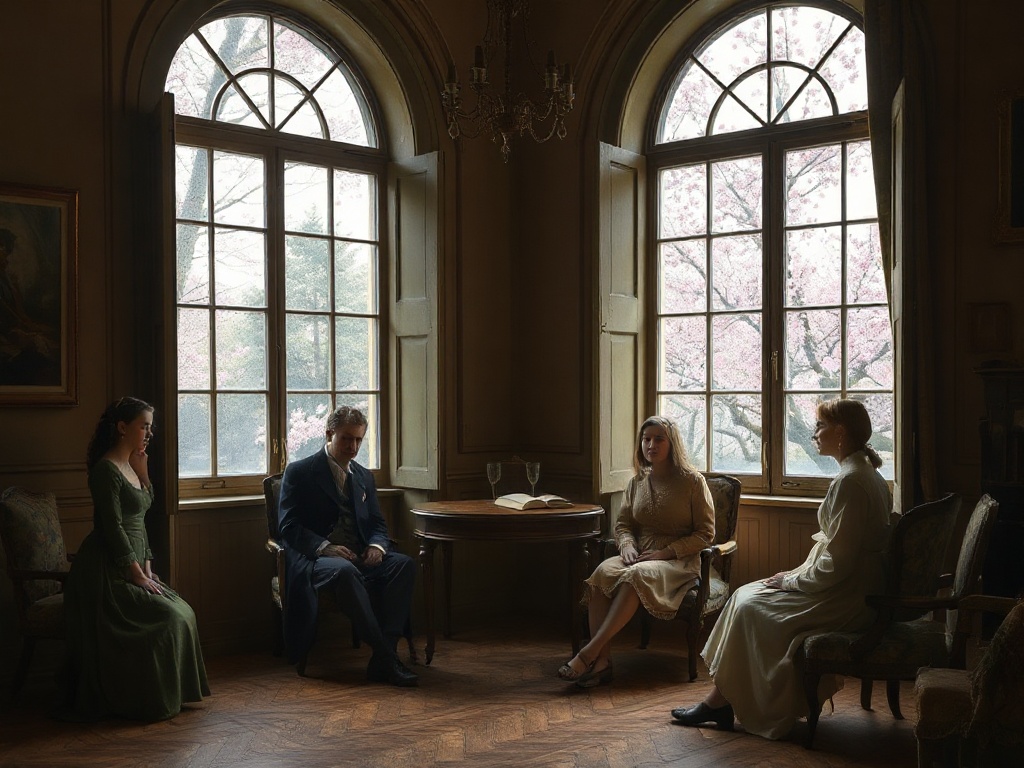
Anton Chekhov is widely recognized as a pivotal figure in modern drama, and a cornerstone of realistic theatre. His plays, unlike the melodramatic conventions that preceded them, eschewed sensationalism and instead focused on the mundane details of everyday life, portraying characters grappling with disillusionment, quiet desperation, and the limitations of their circumstances. This departure from established theatrical norms marked a significant shift, paving the way for future generations of playwrights to explore humanity with unprecedented honesty and complexity.
Chekhov’s realism wasn’t simply about depicting the world as it appeared – it was about exploring the psychological and emotional realities that lay beneath the surface. He championed the idea that true drama wasn’t found in grand gestures or dramatic confrontations, but in the subtle nuances of conversation, the unspoken tensions between people, and the gradual erosion of hope. This dedication to portraying the subtleties of human experience made his work profoundly resonant and continues to captivate audiences today.
## The Everyday Setting and Mundane Events
Chekhov’s plays are almost uniformly set in provincial Russia – estates, country houses, waiting rooms – locales far removed from the palaces and battlefields of earlier drama. This deliberate choice emphasizes the ordinariness of his characters’ lives and the limitations imposed by their social and geographical environments. He wasn’t interested in depicting heroic figures or extraordinary events; rather, he focused on the quiet dramas unfolding in the lives of ordinary people.
The events within his plays are rarely earth-shattering; they are often characterized by missed opportunities, thwarted desires, and the general sense of stagnation that permeates the lives of his characters. A crucial conversation never quite happens, a longed-for love remains unrequited, a hoped-for future dissolves into disappointment. The lack of dramatic climax, which was considered a flaw by some contemporary critics, is precisely what lends his work its distinct realism.
The significance of these seemingly insignificant moments shouldn’t be underestimated. They accumulate to paint a deeply affecting picture of human existence. Chekhov’s understanding of the significance of detail - the way a character arranges their furniture, the food they order, the weather they discuss - contribute profoundly to the plays’ overall realism and reveal much about their inner worlds.
## Psychological Depth and Character Development
Chekhov’s characters are not types or archetypes, but fully realized individuals with complex motivations, contradictory emotions, and deeply flawed personalities. They are often disillusioned, melancholic, and trapped by their own internal conflicts. Their inner lives are as important to the drama as their outward actions.
Rather than simply revealing character through dialogue, Chekhov employed techniques like non-action and subtext to reveal the unspoken truths about his characters. Often, the most revealing moments occur when characters don’t say what they mean, or when their actions contradict their words. The audience is left to piece together their motivations and understand the motivations underlying their behavior.
The characters’ development throughout the plays is subtle, gradual, and often frustratingly slow. They rarely undergo dramatic transformations or experience moments of profound epiphany. Instead, they remain largely unchanged, their limitations and imperfections exposed for the audience to see, making their realities and struggles surprisingly relatable.
## Emphasis on Dialogue and Subtext
Chekhov revolutionized dramatic dialogue. Unlike the heightened language and rhetorical flourishes of earlier plays, his characters speak in a naturalistic, conversational style, using everyday language and often digressing into seemingly irrelevant topics. This focus on natural speech is a vital aspect of his realism.
However, this apparent simplicity masks a deeper layer of meaning. Much of the drama in Chekhov’s plays resides in the subtext – the unspoken thoughts and feelings that lie beneath the surface of the conversation. Characters often say one thing while meaning another, and it is the audience’s task to decipher the hidden messages and understand the underlying tensions. The silences between words are just as important as the words themselves.
This nuanced use of dialogue creates a sense of authenticity and verisimilitude. It mimics the way people actually speak, with its hesitations, interruptions, and evasions. This approach fosters a sense of intimacy between the audience and the characters, drawing them into their world and allowing them to observe their struggles with a greater sense of understanding.
## Unresolved Conflicts and Open Endings
In stark contrast to the traditional dramatic structure, Chekhov’s plays often lack a clear resolution or definitive ending. Conflicts are rarely resolved, desires remain unfulfilled, and characters remain trapped in their cycles of disappointment. This lack of closure is a defining feature of his approach.
This isn’t a flaw; it’s a deliberate artistic choice that reflects Chekhov’s belief that life itself is messy, unpredictable, and often lacking in resolution. He aimed to depict reality as it is, rather than impose a neat narrative structure upon it. The open endings invite the audience to contemplate the characters’ futures and draw their own conclusions about their lives.
The absence of a tidy conclusion emphasizes the ongoing nature of human existence. Life simply continues, with all its complexities and ambiguities, even after the curtain falls. This realistic depiction of an uncertain future remains deeply affecting.
## Conclusion
Chekhov’s plays achieved a level of realism unparalleled in dramatic literature, shifting the focus from grand narratives to the complexities of individual lives and their environment. He redefined what drama could be, emphasizing the importance of psychological depth, naturalistic dialogue, and a willingness to embrace ambiguity and uncertainty. His legacy lies in his ability to capture the essence of everyday life with startling honesty and enduring power.
By eschewing melodrama and embracing the mundane, Chekhov created a space for exploring the subtle nuances of human experience. He revealed the quiet desperation, the unspoken longings, and the enduring resilience of ordinary people, proving that the most profound dramas are often found not in moments of great triumph or tragedy, but in the small, everyday details of existence—a vital contribution to the development of Literatura.
Related Articles