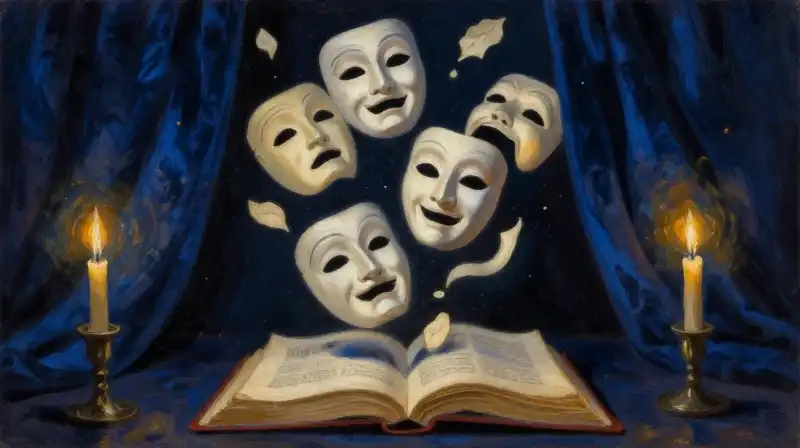

The Best Shakespeare Plays: A Readers Guide to His Greatest Works


Introduction
Approaching the works of William Shakespeare often feels like standing before a mountain range: the scale is immense, the peaks are legendary, but the terrain can be intimidatingly steep. For many readers, the barrier isn’t a lack of interest, but a lack of a map. How does one navigate the jump from the high-stakes political maneuvering of a tragedy to the whimsical, forest-dwelling chaos of a comedy? Is it better to start with the famous romantic tragedies that have been distilled into pop culture, or to begin with the more straightforward histories?
To understand the best Shakespeare plays is to understand not just a collection of stories, but a masterclass in human contradiction. Shakespeare’s brilliance lies in his ability to inhabit characters who are simultaneously heroic and deeply flawed, creating a body of work that remains vital because it refuses to provide easy answers. Whether you are looking for the “best Shakespeare plays for beginners” or seeking a deeper dive into his late, complex romances, the key is to match the play’s specific dramatic energy to your current reading temperament.
The Pillars of Tragedy: From Dread to Existential Crisis

Shakespearean tragedy is not merely about unhappy endings; it is about the structural disintegration of a character’s world, often driven by a specific psychological or external pressure. These works are frequently categorized as “critics’ choice” selections due to their profound impact on the Western canon [2].
The Masterpieces of Character and Consequence
- Hamlet: Widely regarded as the Bard’s definitive masterpiece, Hamlet functions through the internal complexity and contradictions of its protagonist [1]. It is a study of delay, intellect, and the paralysis that comes with over-analysis.
- Macbeth: If Hamlet is a play of thought, Macbeth is a play of action and atmosphere. It is characterized by a “visceral” and “tightly constructed” narrative that sustains an aura of “pure dread and evil” from start to finish [1].
- King Lear: Often noted as a difficult work to engage with initially, Lear is a slow burn that demands patience from the reader [1]. However, it rewards that investment by building toward devastating, “gut-wrenching moments” as the protagonist’s world unravels [1].
- Othello: A focused, intense study of sexual jealousy. While some readers critique the play for its reliance on characters making poor, impulsive decisions, its ability to drive toward a “horrifying climax” remains unmatched [1].
- Julius Caesar: For those seeking an entry point into the genre, Julius Caesar serves as a solid, straightforward tragedy. It provides a clearer, more accessible path into Shakespeare’s tragic structures for readers new to the form [1].
The Landscape of Comedy: Wit, Magic, and Social Play
Shakespearean comedy rarely seeks to provide a simple moral lesson. Instead, these plays often utilize mistaken identities, romantic entanglements, and supernatural elements to explore social dynamics and the absurdity of human desire.
Light, Shadow, and Romantic Tension
- A Midsummer Night’s Dream: A perennial “blockbuster” that relies on a magical atmosphere, ridiculous love triangles, and a lighthearted, comedic final act to resolve its chaotic central conflicts [1, 2].
- As You Like It: This play is notable for the character of Rosalind, who is frequently cited by readers as Shakespeare’s finest female protagonist [1]. It offers a sophisticated blend of wit and pastoral charm.
- The Merchant of Venice: A more complex and controversial work. While it offers profound character studies—most notably the villain Shylock, who remains a deeply complex figure despite being an anti-Semitic stereotype—it remains a challenging text for modern sensibilities [1].
Histories and the Late Romances
Beyond the binary of tragedy and comedy, Shakespeare’s work spans the epic scale of national history and the more experimental, poetic “romances” of his later years.
| Genre/Type | Representative Works | Key Characteristics |
|---|---|---|
| History Plays | Henry IV, Part 1 | Focuses on the “hero’s journey” and uses characters like Falstaff to provide essential comic relief [1]. |
| Late Romances | The Tempest, Cymbeline | The Tempest is often viewed as a “farewell to the theatre,” valued for its lyrical poetry [1], whereas later works like Cymbeline can have convoluted plots that challenge modern readers [1]. |
| Blended Epics | Antony and Cleopatra | A masterful blend of tragedy, romance, and historical narrative [1]. |
A Reader’s Guide: How to Approach the Bard
If you are looking for “best Shakespeare plays to read for beginners,” a haphazard approach can lead to frustration. Instead, consider a path that builds your confidence with his language and narrative structures.
- The Entry Point (The Straightforward Tragedy): Start with Julius Caesar. The political stakes are clear, and the language is direct, providing a solid foundation for understanding dramatic tension [1].
- The Emotional Pivot (The Popular Comedy): Move to A Midsummer Night’s Dream. This allows you to experience Shakespeare’s lighter, more magical side and helps acclimate you to his rhythmic verse without the weight of heavy existential dread [1].
- The Deep Dive (The Complex Character): Once comfortable, tackle Hamlet or Macbeth. These works require more focus but offer the highest rewards in terms of psychological depth and atmospheric power [1].
- The Advanced Study (The Late Works): Finally, approach the late romances like The Tempest. These works are less about plot and more about the beauty of the language and the resolution of complex, often convoluted, themes [1].
Synthesis: Why Shakespeare Endures

The reason we continue to search for the “best” Shakespeare plays is not because we are looking for a definitive ranking, but because his work functions as a mirror. His comedies reflect our capacity for folly and the restorative power of social order; his tragedies reflect our capacity for destruction and the terrifying isolation of the human ego. Whether it is the “visceral” dread of Macbeth or the intricate characterization of Rosalind in As You Like It, Shakespeare provides a language for the experiences that define being human. To read him is not to study a relic, but to engage with a living, breathing exploration of the self.
Sources
- A personal ranking (and mini-reviews) of all of Shakespeare’s plays : r/shakespeare — reddit.com
- The ten best Shakespeare plays of all time — timeout.com
Related Articles