
Science Fiction Books for 4th Graders: From The Wild Robot to Classics

Introduction
Science fiction is often perceived as a genre of vast, intimidating scale—spanning cold voids, complex temporal paradoxes, and the sweeping political machinations of interstellar empires. For a fourth grader, however, the “speculative” element of the genre functions differently. At this developmental stage, science fiction acts as a laboratory for empathy and agency. It is less about the technical mechanics of a warp drive and more about how a character navigates a world that operates by entirely different rules. For the nine- or ten-year-old reader, the genre provides a safe distance to explore profound questions of identity, survival, and what it truly means to be “alive.”
Finding the right entry point requires balancing narrative complexity with thematic accessibility. While some readers may gravitate toward the gentle, character-driven wonder of a robot discovering nature, others may be ready to grapple with the high-stakes tension of a dystopian landscape. This guide categorizes science fiction for 4th graders not just by plot, but by the specific literary “vibe” and cognitive engagement they offer, moving from contemporary middle-grade gems to the foundational classics that shaped the genre.
Foundational Middle-Grade Science Fiction
For readers at or slightly above grade level, the best science fiction often anchors its high-concept ideas in deeply relatable emotional arcs. These works use speculative settings to illuminate universal experiences of loneliness, friendship, and belonging.
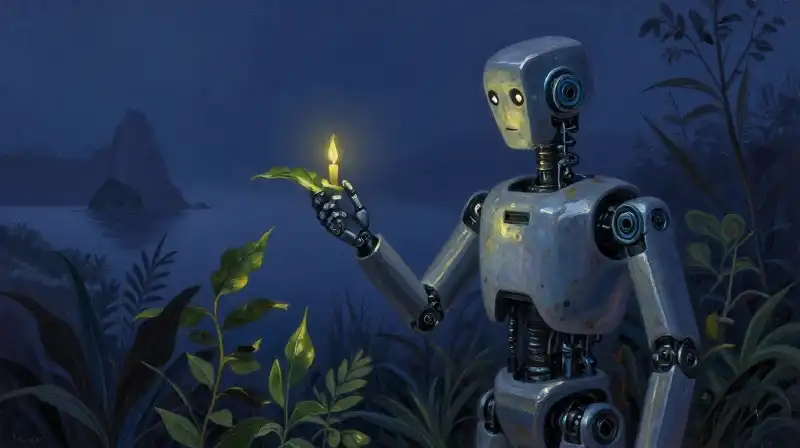
- The Wild Robot by Peter Brown: A quintessential starting point for fourth graders [1]. The story follows Roz, a robot who becomes stranded on a remote, wild island. Through Roz’s attempt to integrate into the natural world, Brown explores themes of adaptation and the intersection of technology and biology. It is a masterclass in using a non-human protagonist to teach human empathy.
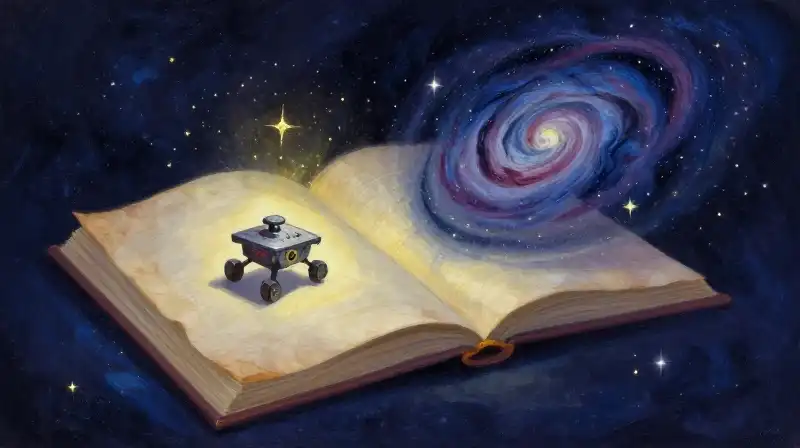
- A Rover’s Story by Jasmine Warga: For those interested in the “space opera” subgenre but seeking a more intimate scale, this novel offers a wholesome perspective [1]. By following the journey of a Mars rover, Warga translates the vastness of space exploration into a personal narrative about purpose and connection.
- Maximillian Fly by Angie Sage: This title offers a unique, slightly edgier take on the genre, leaning into post-apocalyptic or dystopian atmospheres [1]. Featuring a protagonist who is a “roach person,” Sage uses a distinctive perspective to engage young readers who are ready for more unconventional world-building.
The Bridge to Classic Science Fiction
As readers grow more comfortable with genre conventions, they may seek out the works that defined the tropes we recognize today. These “entry point” classics introduce more complex structures—such as time dilation, alternate dimensions, and societal critique—without sacrificing the sense of adventure essential to middle-grade reading.
Transitioning from contemporary stories to these established works helps a reader understand the lineage of science fiction. For example, the following titles serve as vital literary landmarks for children entering the genre [1]:
- A Wrinkle in Time by Madeleine L’Engle: A seminal work that blends science fiction with elements of fantasy to explore the battle between light and darkness across dimensions.
- Enchantress from the Stars by Sylvia Engdahl: An excellent companion to L’Engle, offering a sophisticated look at interstellar travel and the social structures of alien civilizations.
- The Tripods Trilogy by John Christopher: Noted for being relatively short and highly accessible, this series provides a gripping look at a world under alien occupation, making it an ideal choice for readers building their stamina for longer narratives [1].
Navigating Complexity: From Juveniles to Young Adult
Science fiction exists on a spectrum of intensity. As a reader moves toward the upper limits of the fourth-grade level and into the fifth grade, the themes often shift from “discovery” to “survival” or “conflict.”
When selecting books, it is important to distinguish between “Juvenile Science Fiction” and “Young Adult (YA) Science Fiction.” While both may feature younger protagonists, YA literature often delves into mature themes—social upheaval, violence, or complex morality—that may require parental review before being shared with a younger child [1].
| Reader Level | Focus & Themes | Representative Works/Authors |
|---|---|---|
| Early Middle Grade | Empathy, adaptation, and gentle wonder. | The Wild Robot, A Rover’s Story |
| Advanced Middle Grade | World-building, survival, and classic tropes. | A Wrinkle in Time, The Tripods Trilogy |
| High-Intensity/Transitional | Strategy, complex morality, and darker stakes. | Ender’s Game (the first book is an essential starting point) [1]. |
| Historical Perspectives | The evolution of space travel and retro-futurism. | Robert Heinlein (e.g., Rocketship Galileo, Podkayne of Mars) [1]. |
A Note on Historical Context
For the curious reader, exploring older works can provide a fascinating look at how our understanding of the future has changed. The “juvenile” science fiction of authors like Robert Heinlein—including titles such as The Rolling Stones and Have Spacesuit, Will Travel—offers a historical window into the mid-20th-century vision of space [1]. However, readers should be aware that these works can contain dated themes that reflect the era in which they were written, such as in Rocketship Galileo [1].
Frequently Asked Questions
What are the best science fiction books for 4th graders?
The best selections typically balance imaginative world-building with emotional resonance. The Wild Robot is a top recommendation for its accessibility, while A Wrinkle in Time is the gold standard for those ready to move into more literary, complex territory.
How do I know if a science fiction book is too mature for my 10-year-old?
The distinction often lies in the “Young Adult” classification. While a book might be marketed toward teens, the themes can vary wildly. It is always wise to check for content regarding intense conflict or mature social themes, especially when moving toward authors like Orson Scott Card (Ender’s Game) or older historical works.
Are there science fiction books for 5th graders that are different from 4th grade books?
Yes. While 4th-grade reading often focuses on character adaptation and immediate surroundings, 5th-grade reading can begin to incorporate more intricate plot structures, such as the strategic military elements in Ender’s Game or the more intense dystopian elements found in advanced middle-grade series.
The Value of Speculative Reading
Science fiction for young readers is more than mere escapism. By placing characters in “impossible” situations—on Mars, in a post-apocalyptic wasteland, or in a body of metal—these stories force a confrontation with what is essential about the human experience. Whether through the lens of a rover or a time-traveler, the genre teaches children to look at their own world through a different perspective, fostering a sense of wonder and a capacity for critical thinking that remains long after the final page is turned.
Sources
- Science fiction suggestions for a fourth grader : r/booksuggestions — reddit.com
Related Articles