
Star Symbolism in Literature: From Fate to Infinite Desire

Introduction
When a character in a novel looks up at a night sky, they are rarely just observing celestial bodies; they are interacting with a centuries-old lexicon of meaning. For the writer, the star is a versatile tool—a pinpoint of light that can represent the crushing weight of predestination or the dizzying height of an impossible dream. This celestial imagery acts as a bridge between the human experience and the infinite, shifting from the ancient view of stars as divine, controlling entities to the modern perspective of a vast, indifferent, and often terrifying cosmos [1].
To understand star symbolism in literature is to trace the evolution of human consciousness itself. We move from the mythical “connect the dots” narratives of antiquity, where constellations formed the blueprints of morality and history [3], to the introspective, often lonely landscapes of modernism, where the stars serve as mirrors for the soul. By examining how authors employ this imagery, we can see how the stars have been used to navigate the boundaries between fate, desire, and the existential limits of human knowledge.
The Architecture of Fate: Stars as Destiny
In the classical tradition, the stars were not merely lights in the sky; they were the mechanics of the universe. This sense of celestial governance is perhaps most famously captured in the language of William Shakespeare. In Romeo and Juliet, the protagonists are described as “star-crossed,” a term that suggests their tragic end is not merely a result of bad timing or family feuds, but a predetermined movement of the heavens [1, 2]. Here, the stars represent a cosmic script that the characters are powerless to rewrite.
This concept of celestial influence evolved as our scientific understanding of the universe expanded. While ancient texts like the Vedas or the Epic of Gilgamesh viewed the stars through a purely mystical and divine lens, later literature began to use the cosmos to explore the tension between human agency and the unknown [1]. In Mary Shelley’s Frankenstein, the stars and the vastness of the natural world serve to highlight the existential boundaries of human discovery, marking the threshold where scientific ambition meets the overwhelming scale of the universe [1].
The Light of Longing: Stars as Unattainable Aspirations
Beyond the heavy hand of fate, stars often function as metaphors for the things humans reach for but can never quite grasp. This is a psychological use of the symbol, where the distance between the observer and the light represents the gap between reality and desire.
- The Elusive Dream: In F. Scott Fitzgerald’s The Great Gatsby, the “green light” at the end of Daisy’s dock functions with the symbolic weight of a star—a distant, glowing beacon representing the elusive American Dream and the impossibility of recapturing the past [1, 2].
- Existential Reflection: In Virginia Woolf’s To the Lighthouse, Woolf uses the vastness of the universe to ground the internal struggles of her characters. As Lily Briscoe contemplates the cosmos, the stars become a way to measure the scale of her own artistic and personal aspirations against the indifference of time [2].
- The Discovery of Self: In contemporary poetry, the stars often move from the distant to the intimate. Mary Oliver, particularly in American Primitive, uses imagery of stars “burning through the sheets of clouds” to facilitate a narrator’s journey toward discovering their own inner voice and connection to the world [2].
Comparing Celestial Symbolic Functions
To grasp how the “meaning” of a star changes depending on the genre and era, it is helpful to contrast how different literary modes utilize the symbol.
| Literary Mode/Era | Primary Symbolic Function | Example/Context |
|---|---|---|
| Mythology & Epic | Guidance, divine authority, and foundational narrative [1, 3]. | Homer’s The Odyssey; stars as guides through darkness. |
| Classical Drama | Predetermined fate and the “star-crossed” tragedy [1]. | Shakespearean tragedy; characters as pawns of destiny. |
| Modernism | Existential scale and the isolation of the individual [2]. | Woolf; stars reflecting the vastness of human thought. |
| Contemporary Poetry | Personal connection and emotional intimacy [2]. | Mary Oliver; the star as a catalyst for self-discovery. |
What is a star a metaphor for?
In a literary context, a star is rarely a single thing. Its meaning is dictated by its relationship to the character. It can be a guide (providing direction in a metaphorical wilderness), a limit (representing the boundary of what a human can know), or a distraction (the beauty that keeps one from seeing the ground beneath their feet). When an author invokes the stars, they are asking the reader to look upward, shifting the scale of the story from the mundane to the monumental.
What emotion do stars represent?
The emotional resonance of stars tends to fall into two categories: wonder and alienation. In the works of poets like Billy Collins, stars can be whimsical, personified as inhabitants of a night house, evoking a sense of playful curiosity [2]. Conversely, in more existentialist works, the stars represent a profound sense of loneliness—the realization that the universe is vast, ancient, and largely indifferent to human suffering [1].
The Evolution of the “Star”
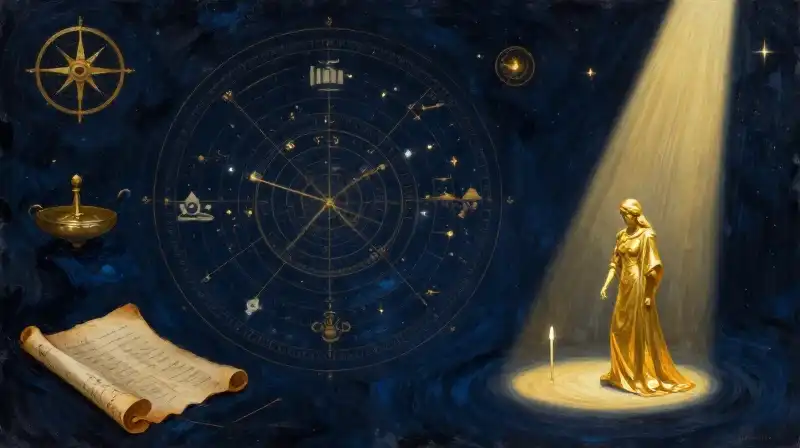
It is worth noting how the symbolism has shifted from the heavens to the individual. In ancient Mesopotamia, stars were tools of political legitimacy; rulers associated themselves with specific celestial bodies to assert a divine right to rule [2]. Similarly, ancient Egyptians viewed stars as the souls of the deceased, providing a map for the afterlife [2].
In the modern era, this “divine” light has been secularized. The star has transitioned from a celestial entity to the symbol of “stardom”—representing fame, the pursuit of individual identity, and the cult of personality in film and music [2]. We have moved from looking at the stars to worshiping the people who shine like them.
Synthesis: Why the Stars Matter in Prose
The enduring power of star symbolism lies in its ability to provide instant scale. By placing a character against a backdrop of celestial light, a writer can immediately signal whether that character is fighting against destiny, chasing a dream, or searching for meaning in a void. Whether it is the guiding light of an epic hero or the distant, mocking light of a lost lover’s goal, the star remains literature’s most effective way to connect the tiny, flickering life of a human being to the infinite expanse of the universe.
Sources
- Stars Symbolism: Cosmic Meanings in Culture & Art — astronomyfornewbies.com
- The Role of Stars in Art and Culture — starregister.org
- What do stars symbolize in mythology? : r/mythology — reddit.com
Frequently Asked Questions
What is a star a metaphor for?
In literature, a star can function as a guide providing direction, a limit representing the boundaries of human knowledge, or a distraction. It can also represent the crushing weight of predestination, unattainable aspirations, or the gap between reality and desire.
What emotion do stars represent?
Stars often evoke emotions of wonder and playful curiosity, as seen in the whimsical personification used by poets like Billy Collins. Conversely, they can represent alienation and a profound sense of loneliness due to the indifferent vastness of the universe.
Related Articles