
Examples of Alliteration in Poetry: From Dr. Seuss to Shel Silverstein


Introduction
Consider the physical sensation of reading a sentence like “the slippery snake slithered past the slippery slide” [2]. There is a tactile, almost percussive quality to the way the tongue must move to navigate the repeated “s” sounds. This is the essence of alliteration: the repetition of the same beginning consonant sound in two or more words within a line or verse [2]. While often categorized as a simple tool for children’s verse, alliteration is a sophisticated device that manipulates rhythm, mood, and phonetic texture, turning language into a musical instrument.
From the playful chaos of Dr. Seuss to the sharp, rhythmic wit of Shel Silverstein, alliteration serves as more than just a decorative flourish. It is a structural engine that drives memory, creates comedic timing, and dictates the “mouthfeel” of a poem. Whether it is being used to craft a difficult tongue twister or to build a gentle, sing-song narrative, alliteration bridges the gap between the visual word and the auditory experience.
The Mechanics of Sound: How Alliteration Works

At its core, alliteration relies on the phonetic similarity of initial consonants. However, the effectiveness of the device depends heavily on the specific sounds chosen. The difficulty and texture of a poem can vary wildly based on these phonetic selections:
- Accessible Phonics: Softer or more common consonant sounds, such as “f,” “b,” or “c,” are often used to create approachable, rhythmic flows, as seen in Alan Loren’s “Eat Wisely” [2].
- Phonetic Challenges: More complex or sibilant sounds, like the “s” in Denise Rodgers’ “Slithery, Slidery, Scaly Old Snake,” can increase the difficulty of reading aloud, transforming a simple poem into a feat of dexterity [2].
- Textural Variation: Sophisticated writers use alliteration to shift the mood of a piece. For example, Alan Loren’s “The Football Game” utilizes “b” sounds in the first verse to establish one texture, before pivoting to “d” sounds in the second to signal a shift in tone or action [2].
Alliteration in Children’s Literature and Nursery Rhymes
In the realm of children’s poetry, alliteration is a fundamental tool for engagement. It creates a playful, rhythmic tone that captures a young reader’s imagination and makes the text significantly more memorable [2]. This utility is most visible in two distinct forms: the nursery rhyme and the modern rhythmic narrative.
The Foundational Tongue Twister
Classic nursery rhymes often function as the earliest introduction to alliterative complexity. These works frequently lean into heavy repetition to create “tongue twisters”—verses that are challenging to recite but highly engaging due to their rhythmic intensity [1, 2]. Notable examples include:
- “Peter Piper”: A masterclass in the heavy repetition of the “p” sound [2].
- “Betty Botter’s Butter”: This rhyme uses the “b” sound to establish a distinctive, sing-song rhythm [2].
- “She Sells Seashells”: A historical example, such as Terry Sullivan’s 1908 version, which uses the repeated “s” sound alongside similar words like “seashells” and “seashore” to create phonetic friction [2].
Modern Rhythmic Mastery: Dr. Seuss and Shel Silverstein
Modern authors have taken these foundational techniques and applied them to more complex narrative structures. Dr. Seuss, for instance, famously combined alliteration with rhyme and repetition to create works like Fox in Socks [1]. By utilizing alliterative pairings such as “the/three,” “flea/flew,” and “breeze/blue,” Seuss turned reading into a rhythmic, almost athletic experience [1].
Shel Silverstein approaches the device through a lens of humor and narrative flow. In “Bear in There,” he uses alliteration—such as “He’s nibbling the noodles”—to ensure the poem moves easily and remains easy to memorize [2]. Silverstein also frequently pairs alliteration with nonsense words to heighten the sense of playfulness, a technique evident in “I Saw An Ol’ Gnome,” where the “g” and “n” sounds are repeated to create a whimsical, cohesive soundscape [2].
What are 5 examples of alliteration in poetry?
To understand how alliteration manifests across different styles, consider these five distinct examples ranging from simple phonetic repetition to complex lyrical texture:
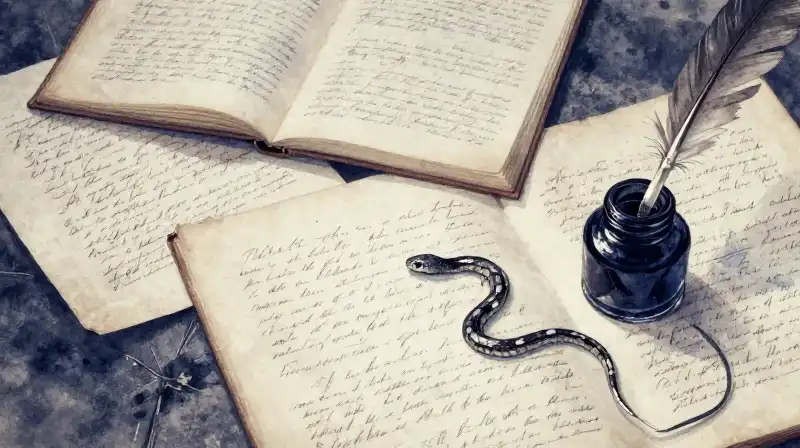
- The Sibilant Snake: “The slippery snake slithered past the slippery slide” [2]. This demonstrates how repeated “s” sounds can mimic the sound of the subject being described.
- The Plosive “P”: “Peter Piper picked a peck of pickled peppers” [2]. This shows how hard consonant sounds can create a rapid-fire, percussive effect.
- The Dr. Seuss Pairing: “the/three” or “flea/flew” [1]. These demonstrate how alliteration can be used within a rhythmic, rhyming structure to create a “bounce.”
- The Silverstein Narrative: “He’s nibbling the noodles” [2]. This exemplifies how alliteration can be used to aid the flow of a humorous line.
- The Hopkins Texture: “With swift, slow; sweet, sour; adazzle, dim” (from Gerard Manley Hopkins’s “Pied Beauty”). This shows alliteration used to create a layered, sensory experience through contrasting descriptors.
Beyond the Page: Alliteration in Songwriting
The principles of alliterative poetry are not confined to the printed page; they are vital tools in songwriting used to capture listener attention and create “earworms.” A contemporary example is Taylor Swift’s “Bad Blood,” which utilizes the repetition of the “b” sound to create a punchy, assertive lyrical rhythm [2]. This demonstrates that the device’s ability to provide structure and emphasis is universal across many forms of oral and written art.
Synthesis: Why Alliteration Matters
Alliteration is far more than a repetitive trick; it is a bridge between language and music. In the hands of a skilled writer, it can act as a rhythmic guide, a comedic tool, or a way to simulate the very sounds of the world being described. Whether it is providing the foundational “sing-song” rhythm for a child learning to speak or providing the percussive drive in a modern pop song, alliteration remains one of the most effective ways to make language resonate, both in the mind and in the mouth.
Sources
- Examples of Alliteration Poems — yourdictionary.com
- 11 Alliteration Poems for Kids Perfect for Teaching Poetry — teachstarter.com
Frequently Asked Questions
What are 5 examples of alliteration in poetry?
Five examples include the sibilant "slippery snake" phrase, the plosive "Peter Piper" rhyme, Dr. Seuss's rhythmic pairings like "flea/flew," Shel Silverstein's "nibbling the noodles," and Gerard Manley Hopkins's sensory descriptors in "Pied Beauty."
What is an example of a poem using alliteration?
The article cites several poems, such as Alan Loren's "Eat Wisely," Denise Rodgers' "Slithery, Slidery, Scaly Old Snake," and Dr. Seuss's "Fox in Socks."
Related Articles