
What historical context surrounds Miguel de Cervantes' 'Don Quixote'

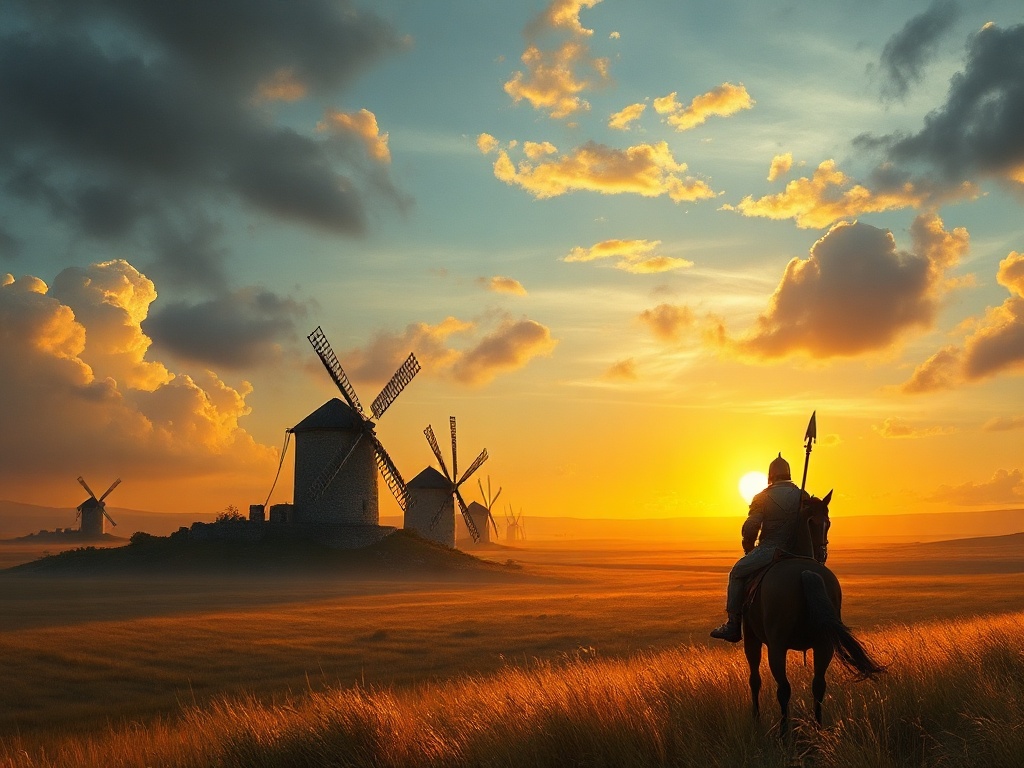
Miguel de Cervantes’ Don Quixote, published in two parts (1605 and 1615), is often hailed as the first modern novel. However, to fully appreciate its brilliance and enduring relevance, understanding the historical backdrop against which it was written is crucial. The novel isn’t simply a fantastical tale of a delusional knight errant; it’s a deeply layered commentary on the socio-political and cultural shifts occurring in Spain during the late Renaissance and early Baroque periods, using satire and allegory to examine the transition from a golden age to a period of decline.
The Spain Cervantes knew was a nation grappling with significant challenges. Having reached the zenith of its power with a vast empire, Spain was facing economic hardship, military setbacks, and increasing religious tension. The fading grandeur of the Habsburg Empire, coupled with the burgeoning influence of rival European powers, created a sense of anxiety and uncertainty that subtly permeates Don Quixote. The novel’s themes of idealism versus reality, tradition versus progress, and madness versus sanity are inextricably linked to the historical anxieties of its time, providing a window into a society on the cusp of profound change.
## The Decline of the Spanish Empire
The 16th century had been a period of unparalleled expansion for Spain, fuelled by the riches extracted from the Americas. However, by the early 17th century, the empire was showing signs of decay. Constant warfare, particularly against the Dutch and English, drained the Spanish treasury. The expulsion of the Moriscos (converted Muslims) in 1609 further devastated the Spanish economy, particularly agriculture, as skilled laborers were lost. This economic instability created a climate of pessimism and uncertainty, reflected in Don Quixote’s portrayal of decaying estates and the desperation of its characters.
One key factor was the Sistema de Casas de Contratación, the institution controlling trade with the Americas. While initially successful, it became increasingly bureaucratic and inefficient, hindering economic growth and stifling entrepreneurial spirit. Cervantes subtly critiques this system through characters who are thwarted by bureaucratic red tape, highlighting the disconnect between the imperial ambition and the reality of Spanish governance. The lavish lifestyles of the nobility, supported by colonial wealth, stood in stark contrast to the poverty of the peasantry, a disparity explored in the novel’s depiction of social inequality.
Finally, the constant pressure of external threats, like the Ottoman Empire and the rising power of France, further weakened Spain. The defeat of the Spanish Armada in 1588 had shattered the illusion of Spanish invincibility and marked a turning point in European power dynamics. This sense of vulnerability is echoed in Don Quixote’s obsessive desire to defend his kingdom and uphold chivalric ideals, a nostalgic yearning for a more glorious past.
## The Golden Age and its Discontents
The “Siglo de Oro” (Golden Age) of Spanish literature and arts was in full swing during Cervantes’ lifetime, producing literary giants like Lope de Vega and Calderón de la Barca. However, beneath the surface of artistic flourishing, there was a growing sense of disillusionment. This era of artistic triumph was often accompanied by social and political tensions, fueled by the increasingly rigid social hierarchy and the dominance of the Catholic Church. Don Quixote can be seen as a critical engagement with this cultural landscape, playfully deconstructing its conventions and questioning its values.
The popularity of chivalric romances, the very literary genre that Don Quixote emulates, reveals a key aspect of the Golden Age’s internal contradictions. While these romances celebrated heroism, honor, and courtly love, they were increasingly seen as escapist fantasies, divorced from the realities of contemporary Spain. Cervantes brilliantly satirizes these romances, highlighting their inherent absurdity and demonstrating the dangers of blindly adhering to outdated ideals. By portraying Don Quixote’s delusions as a direct consequence of excessive romance reading, Cervantes implicitly critiques the genre’s influence on society.
Despite the flourishing arts, Spain also faced moral and religious concerns. The Counter-Reformation, responding to the Protestant Reformation, led to a more stringent and often oppressive enforcement of Catholic dogma. This atmosphere of religious zeal created an environment where dissent and questioning were discouraged. Don Quixote’s encounters with religious figures, often depicted with humorous skepticism, reflect a subtle critique of the Church’s authority and the potential for hypocrisy within its ranks.
## The Rise of the Baroque
The transition from the Renaissance to the Baroque period was underway during Cervantes’ lifetime, profoundly impacting artistic and literary expression. The Baroque emphasized emotional intensity, dramatic contrasts, and a sense of ornamentation, moving away from the Renaissance’s emphasis on harmony and balance. Don Quixote embodies many characteristics of the Baroque, particularly in its complex narrative structure, its exploration of psychological states, and its blending of the sublime and the grotesque.
The Baroque fascination with illusion and deception finds resonance in Don Quixote’s constant misinterpretations of reality. The blurring of lines between fantasy and reality, a hallmark of the Baroque aesthetic, is central to the novel’s comedic and philosophical impact. The detailed and often elaborate descriptions of landscapes, characters, and events reflect the Baroque preference for visual richness and sensory detail, creating a world that is both captivating and unsettling.
Cervantes’ use of metafiction, acknowledging the artificiality of the narrative, is another characteristic borrowed from the Baroque era. The constant interplay between the author, the characters, and the reader challenges the conventional boundaries of storytelling and invites a more active and self-aware engagement with the text. This self-referentiality, a defining feature of the Baroque, anticipates later developments in literary theory and modernism.
## Social Hierarchy and Class Conflict
Spanish society in Cervantes’ time was rigidly structured by a hierarchical system that determined social status, privilege, and access to resources. The nobility held the highest position, followed by the clergy, the merchants, and the peasantry. Don Quixote offers a critical portrayal of these social divisions, exposing the inequalities and injustices inherent in the system, while also exploring the complexities of human relationships across different classes.
Don Quixote, despite his noble lineage, represents a decaying aristocracy, clinging to outdated notions of chivalry and struggling to maintain his social standing in a changing world. His relationship with Sancho Panza, a humble peasant, highlights the tensions between the ruling class and the working class. Sancho’s earthy wisdom and common sense often provide a counterpoint to Don Quixote’s idealistic pronouncements, offering a glimpse into the perspective of those who are excluded from the privileges of the nobility. The novel, through these interactions, subtly critiques the unfairness of the hierarchical system.
The portrayal of various social types – merchants, friars, muleteers, and beggars – showcases the diversity and complexity of Spanish society. Cervantes offers a nuanced and often satirical depiction of each group, revealing their strengths, weaknesses, and motivations. He depicts the struggles of common folk, emphasizing the harsh realities faced by many in a society marked by extreme disparity.
## Conclusion
Don Quixote is undeniably a product of its time, deeply interwoven with the historical, social, and cultural landscape of 17th-century Spain. Understanding the decline of the empire, the contradictions of the Golden Age, the emergence of the Baroque, and the rigid social structures of the era enriches our appreciation of the novel’s themes, characters, and artistic innovations. Cervantes brilliantly uses his narrative to explore the anxieties and uncertainties of a nation in transition, making Don Quixote not just a masterpiece of literature, but also a valuable historical document.
Ultimately, Don Quixote’s enduring appeal lies in its ability to transcend its historical context. While firmly rooted in the realities of 17th-century Spain, the novel’s exploration of universal themes—the clash between idealism and reality, the search for meaning, and the power of imagination—continues to resonate with readers across centuries and cultures. The genius of Cervantes lies in his ability to create a work that is both profoundly specific to its time and remarkably timeless in its relevance.
Related Articles