Historical Fiction Mystery Series: Eras, Tropes, and Subgenres

The Architecture of the Past: Understanding Historical Fiction Mystery Series
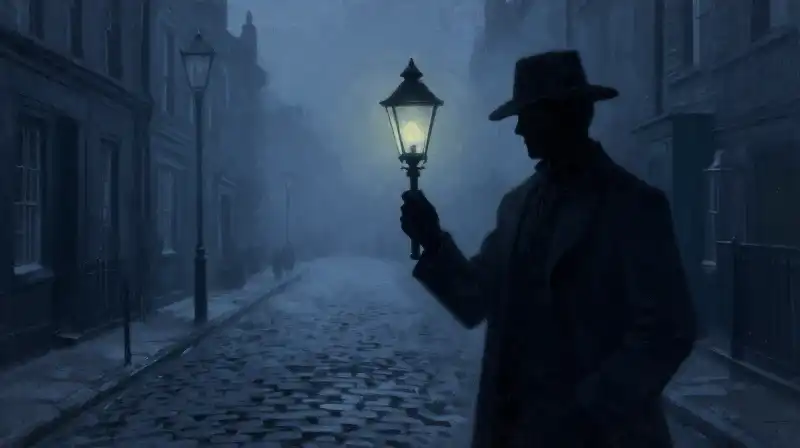
A detective walking the fog-slicked streets of Victorian London is more than a trope; it is a collision of two distinct narrative engines. The first is the logic of the whodunit, demanding clues, red herrings, and a resolution of truth. The second is the weight of history, demanding an immersion into the social hierarchies, medical limitations, and political tensions of a bygone era. When these engines sync, the result is the historical fiction mystery series—a genre that uses the constraints of the past to heighten the stakes of the present.
Unlike a standalone historical novel, which might focus on a singular sweep of time, a mystery series relies on the iterative exploration of an era. Through a recurring protagonist, readers do not merely visit a period; they inhabit it. Whether it is the theological complexities of a 13th-century priory or the trauma-filled landscape of post-WWI Scotland, these series leverage specific temporal settings to transform the act of investigation into an act of historical excavation.
Eras as Narrative Engines
In historical mysteries, the setting is rarely a passive backdrop. Instead, the era functions as a primary source of tension, often providing the very obstacles the detective must overcome. Authors select specific windows of time where social order is fragile or undergoing radical transformation.
- The Medieval and Ecclesiastical: Settings such as 12th-century England or 13th-century priories allow for “ecclesiastical mysteries” [2]. In Ellis Peters’ Chronicles of Brother Cadfael, the anarchy of the 1135–1145 period provides a landscape of political instability that mirrors the moral complexities of the crimes being solved [1]. Similarly, Priscilla Royal’s Prioress Eleanor series utilizes the religious structures of 1270 to frame its investigations [2].
- The Regency and Aristocratic: The late 18th and early 19th centuries offer a playground of high-society secrets and rigid etiquette. Darcie Wilde’s Rosalind Thorne series navigates the nuances of the Regency era, while D.M. Quincy’s Atlas Catesby series focuses on the intersection of adventure and aristocratic social evolution [1, 2].
- The Victorian and Edwardian Eras: Often considered the cornerstone of the genre, these periods offer a wealth of sub-genres. They can be explored through the lens of domestic “upstairs/downstairs” drama, as seen in Jennifer Ashley’s Kat Holloway series [2], or through the reimagining of classic archetypes, such as the gender-bending Sherlockian approach in Sherry Thomas’s Lady Sherlock [1].
- The Post-War Psychological: The aftermath of World War I provides a darker, more internal terrain. Charles Todd’s Inspector Ian Rutledge series uses the setting to explore the psychological toll of the conflict, specifically through a protagonist grappling with shell shock [1].
- The Gilded Age: In America, the period between 1880 and 1910 allows for mysteries centered on the friction between immense wealth and the shifting tides of immigration, exemplified by Rosemary Simpson’s New York-based series [2].
Subgenres, Tropes, and the Subversion of Identity
As the genre has matured, it has fractured into specialized niches that move beyond the standard “detective in a period costume.” These subgenres often use historical detail not just for atmosphere, but to challenge the reader’s expectations of authority and gender.
Specialized Sub-genres
Some series find their footing by anchoring the mystery in a specific professional or atmospheric niche:
- Medical History: Authors use the evolution of science to ground their plots. Ambrose Parry’s William Raven series utilizes the gritty, detailed medical realities of 1847 Edinburgh [2], while Kaite Welsh’s Sarah Gilchrist series examines the systemic struggles of female medical students in 1892 [2].
- Medieval Noir: This niche applies the hard-boiled, cynical elements of noir fiction to a medieval setting, creating a tonal bridge between ancient brutality and modern investigative grit, as seen in Jeri Westerson’s Crispin Guest series [2].
The Motif of Subversion
A recurring strength of the modern historical mystery is the subversion of gender roles. Because historical settings often had strict limitations on who could hold power, authors frequently use these constraints to create ingenious protagonists:
- The Fictitious Front: In the Lady Sherlock series, Charlotte Holmes must use her brother as a male proxy to conduct her investigations, turning a societal limitation into a narrative engine [1].
- The Hidden Genius: The Mrs. Jeffries series employs the trope of the “invisible” servant, where a housekeeper operates as the true intellectual force behind a Scotland Yard inspector [1].
Comparing Historical Mystery Styles
To understand how an author approaches the genre, it is helpful to categorize them by their primary narrative objective. While all historical mysteries require research, their “feel” differs based on whether they prioritize the procedural, the romantic, or the atmospheric.
| Approach | Primary Focus | Representative Elements | Example Style |
|---|---|---|---|
| The Immersionist | Rigorous historical accuracy and “armchair” travel. | Detailed descriptions of period-specific customs, architecture, and daily life [1]. | Charles Finch (Charles Lenox series) |
| The Romanticist | The “slow-burning attraction” between leads. | Mystery plots that serve as a backdrop for character-driven emotional arcs [2]. | Andrea Penrose (Wrexford & Sloane) |
| The Globetrotter | Geographical expansion and adventure. | Moving the investigation across international borders to explore different cultures [2]. | Tasha Alexander (Lady Emily) |
Why the Genre Endures

The enduring appeal of historical fiction mystery series lies in their ability to offer a dual sense of discovery. We are solving a puzzle of human motive, yes, but we are also solving the puzzle of a lost world. When an author like Charles Finch provides a “rigorously researched, charming narrative,” they act as an armchair companion, guiding the reader through the textures of a vanished era [1].
Ultimately, these series matter because they allow us to examine the continuity of human nature. Whether it is the trauma of a soldier in 1920 or the social maneuvering of a Regency lady, the mysteries prove that while the tools of investigation and the social codes of the era change, the fundamental questions of justice, deception, and truth remain constant. We read them to see how the past lived, but we stay for the timeless thrill of the hunt.
Sources
- 17 historical mystery series to fill your summer TBR list — bookpage.com
- 30 Historical Mystery Series to Get You Through Any Crisis | The New York Public Library — nypl.org
Related Articles