Illustrated Classic Books: A Guide to Abridged Editions

Introduction
For many readers, the first encounter with the sweeping landscapes of Victorian England or the cosmic dread of 19th-century science fiction does not come from a heavy, cloth-bound tome, but from a slender, brightly colored volume with a striking image on the front. These are the “Great Illustrated Classics,” a series that has served as a quiet gateway to the Western canon for generations of developing readers. Published under the Baronet Books imprint by Waldman Publishing, the collection comprises 66 titles that condense complex narratives into accessible formats [1]. While they are often remembered with nostalgia, these books occupy a unique, sometimes debated space in literary history: they are neither mere picture books nor full-length novels, but a specialized form of abridged adaptation designed to bridge the gap between childhood reading and the rigors of unabridged literature [1, 2].
The Architecture of the Abridged Edition
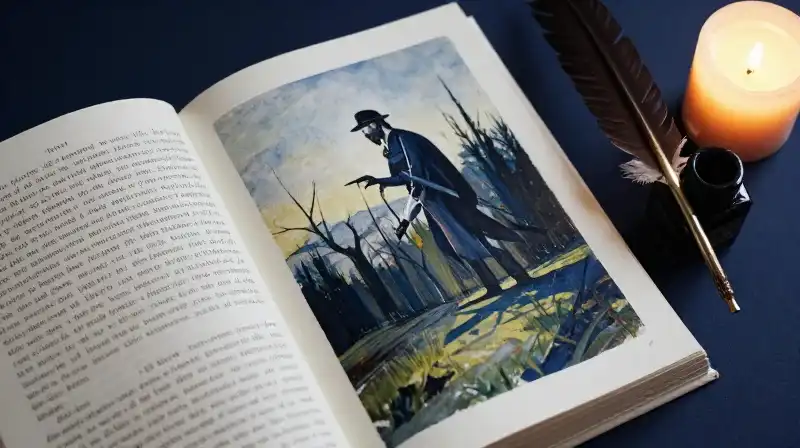
Understanding the value of illustrated classic books requires distinguishing them from their “OG” or unabridged counterparts. An abridgment is an act of literary curation; it involves stripping away subplots, secondary characters, and dense descriptive passages to preserve the core narrative arc and essential themes [2]. In the case of the Great Illustrated Classics, this process is paired with a specific visual rhythm: beautiful illustrations are placed on every other page [1].
This dual-modality—text paired with frequent visual cues—functions similarly to modern graphic novels, providing a visual anchor that helps the reader navigate the tone and setting of the story [1]. For a child encountering the atmospheric gloom of Dracula or the high-stakes adventure of The Adventures of Huckleberry Finn, these illustrations do more than decorate; they provide a semiotic shorthand that aids comprehension and sustains engagement [1, 2].
Abridged vs. Unabridged: Key Differences
| Feature | Abridged Illustrated Editions | Unabridged Original Texts |
|---|---|---|
| Narrative Scope | Focused on primary plot points and central character arcs. | Includes all subplots, digressions, and thematic expansions. |
| Language & Syntax | Streamlined for readability; often adjusted for specific Lexile levels. | Retains the author’s original, often complex, period-specific prose. |
| Visual Integration | High; illustrations are integral to the pacing and comprehension. | Low; illustrations are usually secondary or absent. |
| Educational Goal | Introduction to genre, author, and story structure. | In-depth linguistic and thematic mastery. |
Genre Breadth and Educational Utility
The strength of the series lies in its refusal to be pigeonholed into a single genre. By offering a wide spectrum of literature, it allows readers to “test drive” different styles of storytelling before committing to the original works. The repertoire includes:
- Science Fiction and Horror: Titles like The Time Machine, War of the Worlds, Frankenstein, and Dracula introduce the tropes of speculative fiction and gothic terror [1, 2].
- Classic Adventure and Realism: Works such as Moby Dick, The Adventures of Huckleberry Finn, and Black Beauty provide foundational examples of epic journeys and character-driven realism [1, 2].
- Social and Historical Drama: Masterpieces like Jane Eyre, Little Women, A Tale of Two Cities, and Sherlock Holmes offer windows into different eras and social structures [1, 2].
Because of this structured approach, the series has become a staple in various educational settings. Beyond the classroom, it is a versatile tool for the homeschooling community, where parents and educators integrate these volumes with specific tutorials and reading exercises to build foundational literacy [1]. The inclusion of specific reading levels and Lexile scores further assists librarians and teachers in matching the right book to the right reader’s developmental stage [1].
Navigating the Reader’s Journey
While these books are excellent entry points, they do require a strategic approach to ensure they serve their intended purpose: moving the reader toward more complex literature. One common pitfall involves standardized testing. Because these are abridged, readers who rely solely on them may find themselves struggling with Accelerated Reader (AR) tests if the quiz questions target specific details, nuances, or character developments that were omitted from the shortened text [2].
How to Use Illustrated Classics as a Literary Launchpad
To get the most out of these editions, readers should treat them as a “map” rather than the entire territory. Consider this progression for a developing reader:
- Identify Interest: Use the illustrated versions to find a genre or author that resonates. If the visual and narrative shorthand of The Call of the Wild captures your imagination, you have found a path.
- Analyze the Core: Pay attention to the central themes presented in the abridged text. What is the driving force of the protagonist? What is the primary conflict?
- The “Deep Dive” Transition: Once the story arc is familiar, move to the unabridged version. This allows you to experience the author’s true voice, the rhythmic complexity of their prose, and the rich subplots that the abridgment had to leave behind.
Which classic books have the best illustrations?
The “best” illustrations are subjective and depend on whether a reader seeks historical accuracy or artistic expression. However, within the context of series like the Great Illustrated Classics, the best illustrations are those that successfully translate the mood of the original work. For instance, in a horror title like Frankenstein, the most effective illustrations are those that utilize shadow and scale to evoke the sublime terror central to Mary Shelley’s work. For adventure novels like Moby Dick, the best illustrations are those that capture the vast, isolating scale of the ocean and the obsessive nature of Captain Ahab.
Synthesis: The Value of the Gateway
The “Great Illustrated Classics” and similar editions—such as the “Illustrated Classics Editions” or “Classic Illustrated Editions”—are more than just simplified stories [2]. They represent a thoughtful pedagogical bridge. By distilling the essence of a work, they lower the barrier to entry for intimidating masterpieces, allowing the fundamental magic of storytelling to shine through without the immediate hurdle of archaic syntax or overwhelming length. They do not replace the classics; they introduce them, ensuring that the great works of the past remain accessible to the readers of the future.
Sources
- Great Illustrated Classics homepage — greatillustratedclassics.com
- Who else read and had dozens of the “Great Illustrated Classics”? : r/nostalgia — reddit.com
Frequently Asked Questions
Which classic books have the best illustrations?
The quality of illustrations is subjective and depends on whether a reader prefers historical accuracy or artistic expression. In the context of series like Great Illustrated Classics, the best illustrations are those that successfully translate the specific mood of the original work, such as using shadow to evoke terror in horror titles.
Related Articles